Birding Japan in Spring: Scenery, Food, and Endemics

By Bernie Grossman 

My wife, Chris, and I have just returned from a 17 day birding trip to Japan that was offered by Field Guides, Inc., Austin, TX (www.fieldguides.com). This was our second trip there. The first in February, 2014, had the goal of seeing the wintering migrants such as the White-naped, Hooded, and Red-crowned Cranes, and the Steller’s Sea Eagle as well as regular residents. The second trip was pointed more at breeding residents as well as some unusual and rare endemics. Our guides on both trips were Phil Gregory and Jun Matsui.

We all know that Japan is an industrialized, first world country made up of several islands off the coast of Asia. Most of us don’t realize that these islands are quite mountainous and forested with the population concentrated in a relatively small portion of the land. There is an extensive intra-country air system and excellent highways, so travel is easy. The nine of us (7 clients, 2 guides) traveled in small buses and by air. In one case, we took an overnight ferry to an island. We stayed mainly in western style “business” hotels with one memorable night in a traditional Japanese inn.

Most mornings started early, so breakfast was delayed or eaten on the road. To do this, we often had to buy breakfasts the previous night at convenience stores such as Family Marts or Seven-elevens. This isn’t as bad as it seems, since the stores had a wide range of both Asian and western foods. Much of it was quite good. The Seven-elevens did not offer Slurpees. Lunches came from convenience stores or restaurants, while dinners came from restaurants or at the hotels.

We had wonderful traditional Japanese dinners and breakfasts a few times. These consisted of an array of small portions of traditional items with sauces or soups. Each place had a little brazier that cooked meat and vegetables in a broth heated by a candle. It was a delight.

Our first stop was the area near Kochi, Shikoku Island southwest of Tokyo. The island is Japan’s fourth largest, and the goal was the Fairy Pitta, an elusive, but beautiful bird. It was so elusive that we spent hours looking for it, but only heard it call distantly twice. Other birds were also scarce causing frustration. The most interesting sighting was a couple of foot or more long, fluorescent  purple earthworms, Siebold’s Earthworm (Google it).

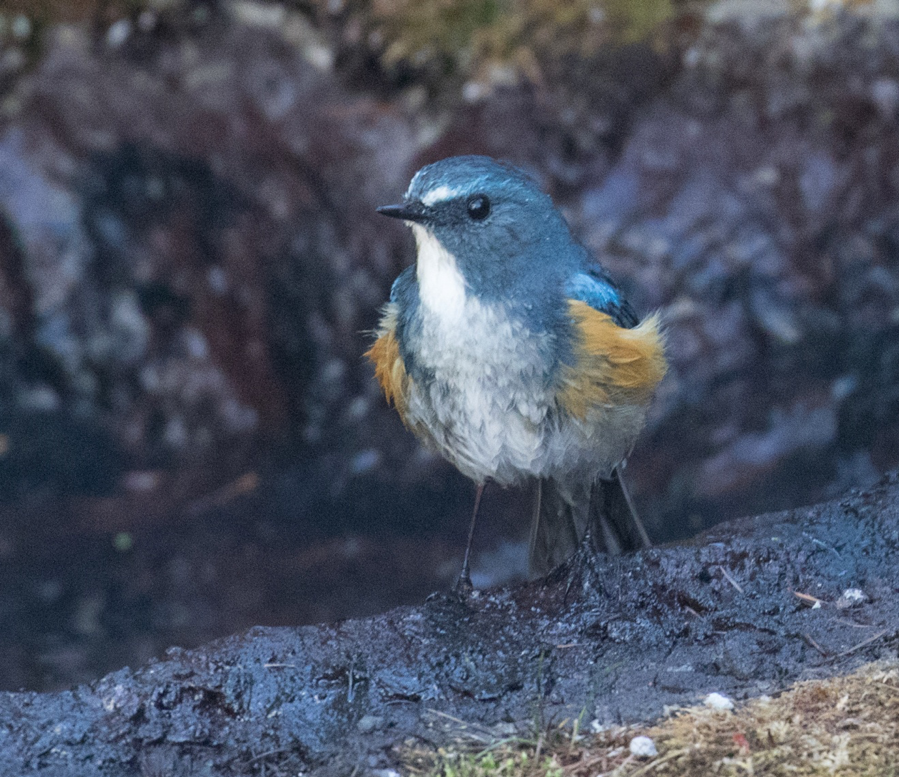
The next stop was the slopes around Mt. Fuji. We saw the mountain thrusting through the clouds as we flew to and from Shikoku. The mountain’s lower slopes are forested and are the home of several thrushes, Again we were frustrated by seeing only one of the several possible birds. We had a great morning at a small nature center which had a pool reached after a walk in through the woods. Along the path, we had sightings of two different Old World Warblers as well as a Goldcrest and a Red-flanked Bluetail, a flycatcher. The Old World Warblers are a real challenge for most American birders, because they have only small differences in plumage within a family. They are best identified by call, which is why we pay the big bucks for guides.
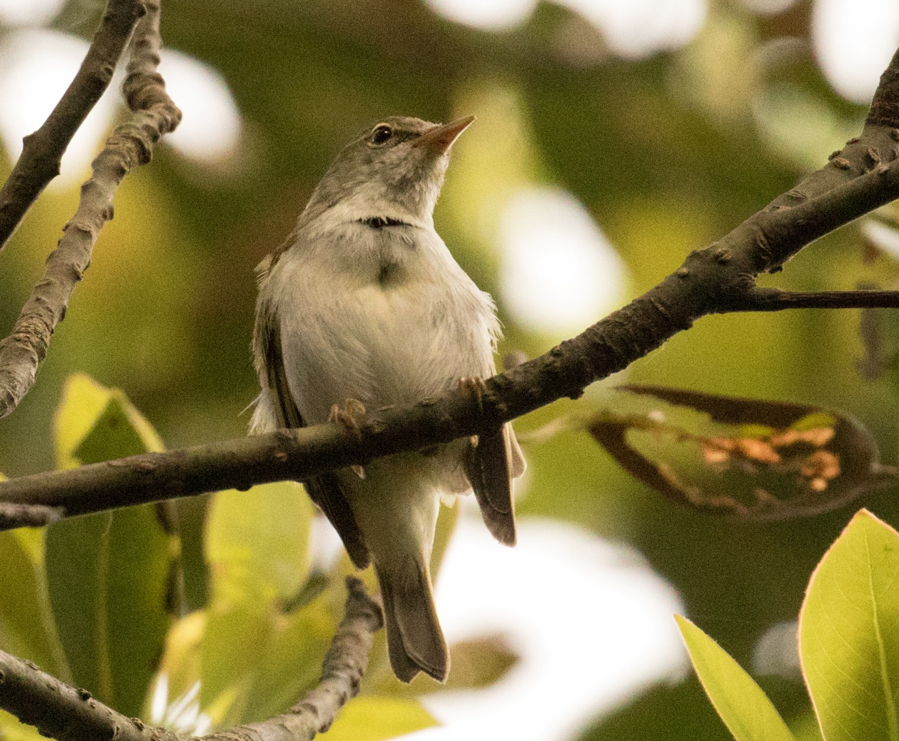
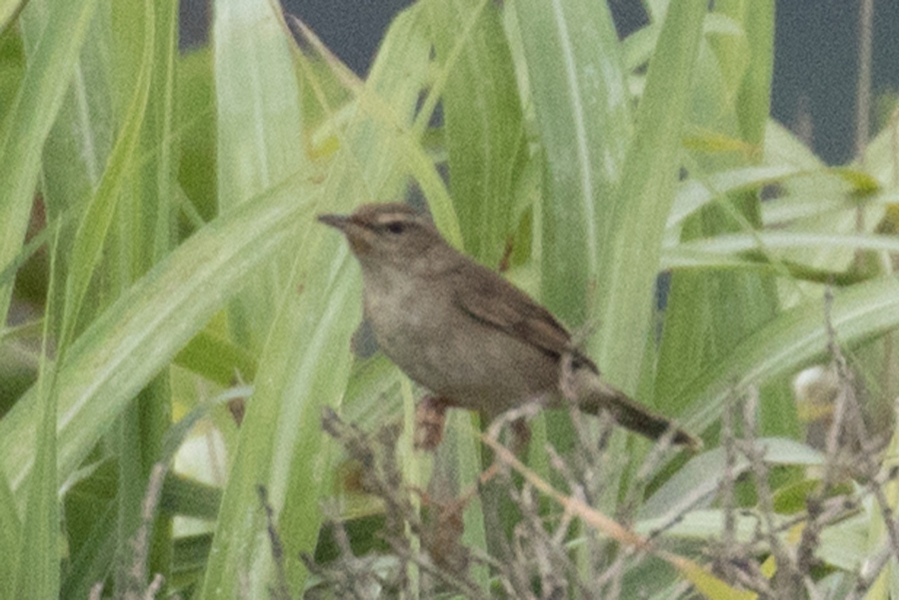
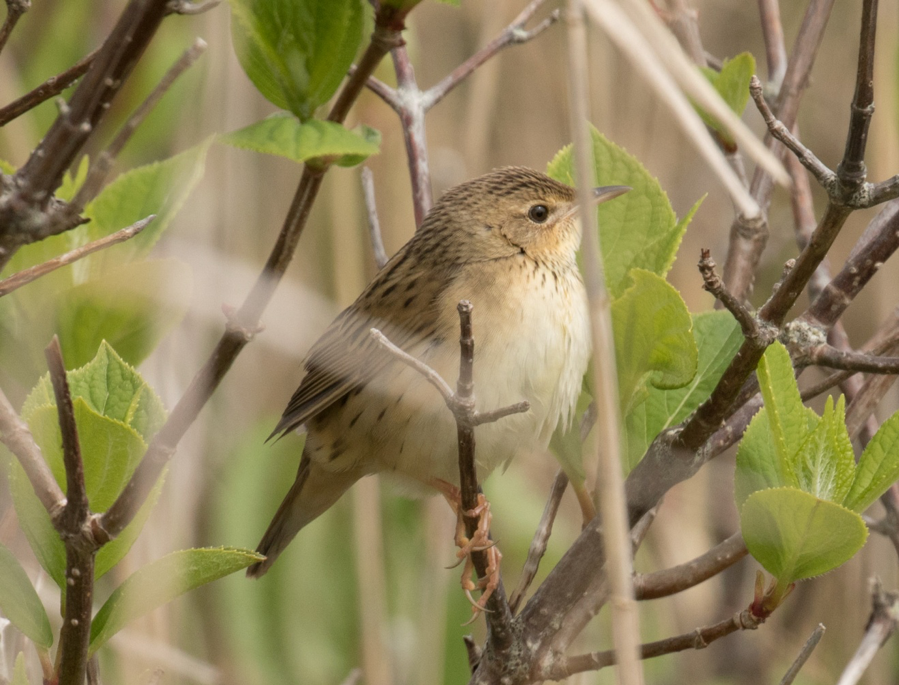
Ijima’s Leaf Warbler

Ijima’s Leaf Warbler

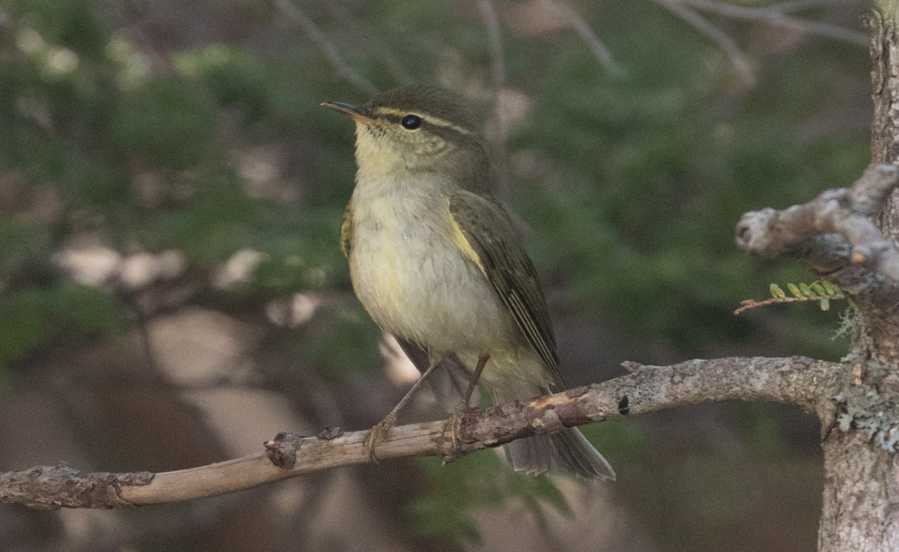
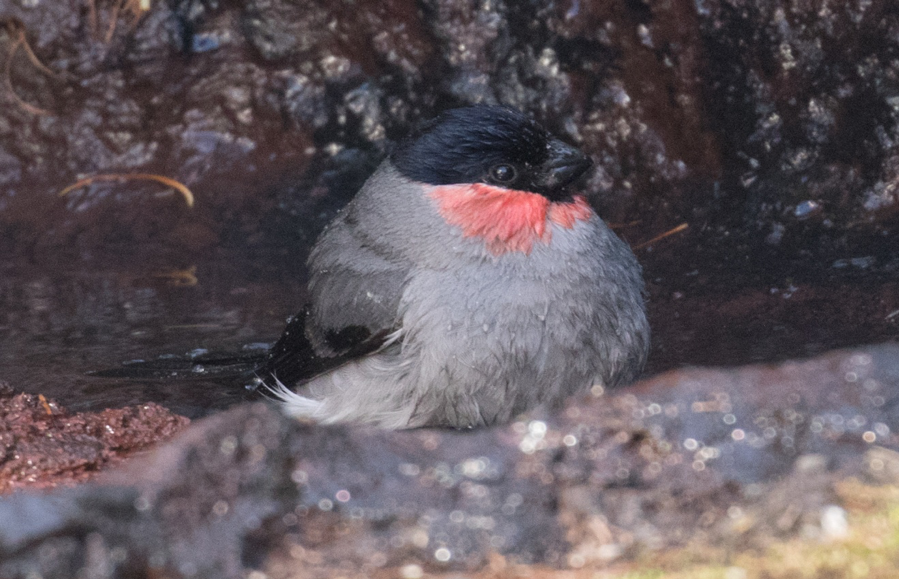
Returning to Tokyo, we boarded the overnight ferry to Miyake-jima, a volcanic island about 100 miles south of Tokyo. The volcano is active with an eruption cycle of about 20 years. All the residents live along the shore near a road that circles the island. After a convenience store breakfast, we drove to the Miaki Nature Center located in a wooded area off the highway. From the parking lot, we spotted a Gray-breasted Bullfinch, which is now separated from the more western Bullfinch. The latter has a much more completely rose-colored breast. The walk in revealed the call of a shy Ijima’s Leaf Warbler (phylloscopus). After some searching, the group found an Owston’s Tit, a recent split from the Varied Tit. The nature center itself had a wet area that finally attracted our target, a beautiful Izu Thrush (Turdus), endemic to the small group of Izu Islands that includes Miyake-jima. Finally, we drove to a lookout on a cliff on the shore. A fierce wind was blowing, but in a birding miracle, our target, Pleske’s Grasshopper-warbler (Locustellus), popped up onto a grass stalk about twenty feet from the van and sang loudly enough to be heard over the wind.

Izu Thrush (Note leg band)

Izu Thrush (Note leg band)

We had only 4-5 hours on the island and returned on the ferry to Tokyo. The next morning, we flew to Amami Island in the Ryukyus south of the main Japanese Islands. Ryukyus are sub-tropical. The birding goal here was a unique set of endemics found only on Amami and Okinawa further south. Walking through a reserve, we were able to get a glimpse at a Ryukyu Robin, one of a split of the robin group into Eurasian, Japanese and Ryukyu. The latter has two sub-species, one on each island. Endemics also seen were the Owstom’s Woodpecker and the Lidth’s Jay. Only a very few hundred of these two species exist. 

Two unusual endemics are the Amami Woodcock and the Amami Black Rabbit. Both are nocturnal. We drove slowly up a forest highway after dark and soon spotted a trio of the strange looking Woodcock walking ahead of us along the paving. Like many island endemics, the Woodcock is flightless and fearless. We were able to approach them closely. Several more were seen as we drove along. Later we saw the Rabbit grazing at the road’s edge. It was a strange looking creature: longer bodied and chunkier than an Eastern Cottontail and having a dark brown coat and small rabbit ears. The highways all have signs posted warning drivers of woodcock and rabbit areas.

Okinawa was a short flight south of Amami. It is physically larger and more heavily settled due to the big American military presence around the island’s southern end. The northern end is mostly protected by a national park with most of the settlement along the coast. Both the islands are inhabited by the Habu, a venomous pit viper feared by the residents. Indian mongooses (mongeese?) were introduced in the early 1970s as a control measure, but those in charge failed to realize that the snake was nocturnal, while the mongoose was diurnal. As a result, the mongoose went after the local animals and nearly wiped out several endemics.

A control program was put in place that included building three fences across the narrow point of the island, and then instituting a strong elimination program. We saw several traps in the woods along the roads and paths we walked. The mongoose population has been reduced significantly in the park and wildlife is recovering.

Okinawa is a stopping point for many migrants, but there are only 14 species considered breeders. Two of the most interesting are the Okinawa Woodpecker and the Okinawa Rail. We spent a considerable amount of time walking a woods road in the park looking and listening for the woodpecker. Finally a pair responded to recorded calls and made brief, but satisfactory appearances in the foliage. We later got a very brief look at a third bird. Only a very few hundred of these remain.

The rail is another flightless endemic. One was spotted as we drove along a yard one morning.

The trip technically ended with our flight back to Tokyo, and two of the group flew home. The remaining five continued on an extension to Hokkaido along with the guides. Hokkaido is the northern-most Japanese island that is sparsely settled and home to big fishing, timber, dairy, and tourist industries. The island’s position close to northeastern Asia exposes it to fierce winter weather. A very severe winter in 2014 almost blocked our first attempt to visit. Permanent snow fences and lighted, downward pointing pole-mounted arrows on road edges are needed for winter travel. In contrast to the southern locations, the weather was quite pleasant.

We spent the first night in Kushiro, and then visited the nearby Kushiro Nature Park. Walking the wooded paths, we saw Eurasian Nuthatch, Pygmy Woodpecker, three different Tit species, and, after a lot of work, a Sakhalin Leaf Warbler (Phylloscopus) hiding in the tree tops.

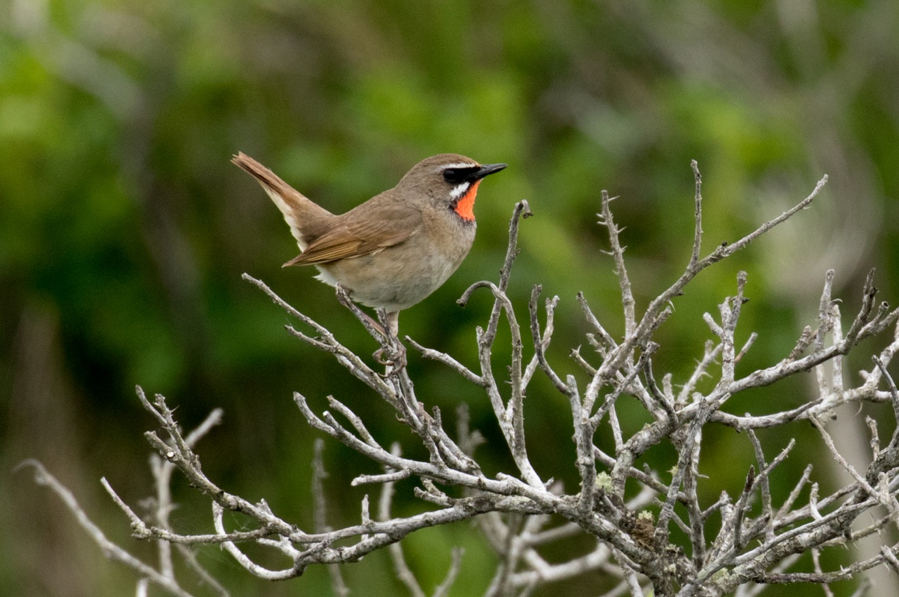
We then spent the afternoon driving along the northeast coast toward Rausu on the Nemuro Peninsula. Along the way, we spotted several Red-crowned Cranes. Along the way, we drove onto the Netsuko sand spit, a long finger into the ocean. Netsuko is a wild, wind-swept peninsula now primarily used by the fishing industry. It does have a nice little visitors’ center where we stopped for some birding. Along the spit, we spotted several White-tailed Eagles, a Red-necked Grebe, a Rhinoceros Auklet, and a Middendorff’s Grasshopper-warbler (Locustellus). My favorite bird was lovely Siberian Rubythroat that was spotted at a distance and who responded nicely to recorded calls. It perched up quite near us and sang.

Netsuko was followed by the trip’s high point for me. We drove on to Rausu where we spent the night at a traditional Japanese inn complete with sleeping mats spread on the floor of our rooms. The inn was located at the base on a wooded hill and next to a flowing stream. A Eurasian Dipper was working the stream when we arrived. The inn had built a small pool out of rocks in the stream and it was stocked with fish daily. After a wonderful traditional Japanese meal, the guests left the table to look out at the spotlighted pool through the dining room windows.

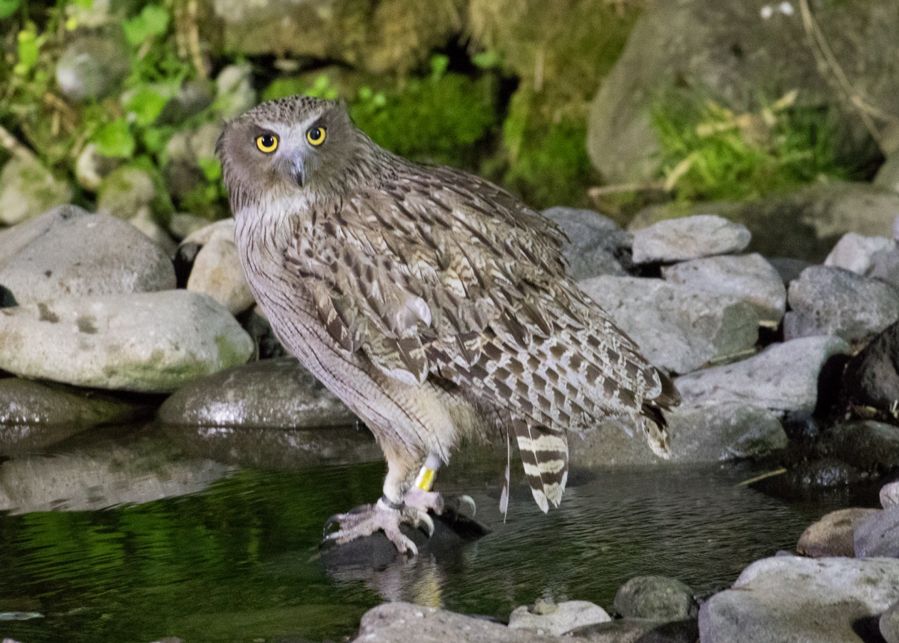
Blakiston’s Fish Owl is the world’s largest owl with a wing span of almost 6 feet and with large females weighing as much as 10 pounds. The bird is listed as endangered with a very few hundred thought to remain. The blakistoni sub-species is found in the Russian islands north of Hokkaido as well as the northeastern portion of the latter. Another sub-species is found in the Russian and Chinese far east. Heavy snows in 2014 blocked our access to the inn, and while we heard an owl near our substitute inn, a Eurasian sable hung around the fish pond blocking the owl’s approach.

The staff reported that the owl pair was calling in the woods behind the inn. The pair dueted with the male calling with a deep boo-boo and the female completing with a hu. After a tense half hour’s wait, we saw a large shape swoop in to land on the pool’s edge. Leg bands told us that it was the female who clomped around the edge. Suddenly she jumped in the water and emerged with a fish in her talon. It was maneuvered to her mouth and swallowed in one gulp. Two more fish were caught and then she left. The male appeared shortly after the group had gone to bed.

After a traditional breakfast, we drove into Shiretoko National Park and the Shiretoko Pass with hopes of more high altitude birds. Fog limited visibility, so the only one of interest seen was a single Pine Grosbeck. We left the pass to go back to Notsuka. Here we had the best looks at the Middendorff’s Warbler and the Rubythroat. Rain ended the day, and we drove to Nemuro further south along the coast. 

Our last full birding day started early with a walk through a beautiful park in Nemuro. Most of the time was spent trying to lure out a Sakhalin Grasshopper-warbler (Lucustellus) from a hedge row. The bird responded to recorded calls by moving back and forth through the hedge while refusing to provide more than a very brief glimpse as it moved.

Later in the morning we went out on a 2+ hour pelagic cruise. The ocean was quiet bird-wise with Rhinoceros Auklets being the most common species. Several Ancient Murrelets were present along with many Pelagic Cormorants. As we approached a rocky island, the boat guided pointed out a few nesting Red-faced Cormorants. These are much more common in the Aleutian and Pribiloff Islands of Alaska. Finally we got close to two or more Sea Otters. 

After lunch, we drove to Kiritappu Meadows and its nature center where a Lanceolated Warbler (Locustellus) was lured up and out of the marsh grasses by recorded calls. This is another difficult to see species that prefers to creep mouse-like through the grass rather than fly place to place.

Our last morning started early as usual with a return to the Nemuro park for another crack at the Sakhalin Grasshopper-warbler. It frustrated us just as it did the pervious morning. A pair of lovely Long-tailed Rosefinches made up for the frustration. After our final Seven-Eleven breakfast, we drove to the Kushiro airport for the internal flight to Haneda Airport in Tokyo. Along the way to Kushiro, we spotted a Red-crowned Crane pair caring for their chicks. A bus drove us from Haneda to Narita, Tokyo’s international airport where the group dispersed for their flights home.
ACT LOCALLY TO SUPPORT BIRDS AND THE PLACES THEY LIVE

In the last 50 years, more than 1 in 4 birds has disappeared across North America. The journal Science recently reported that wild bird populations in the continental U.S. and Canada have declined by almost 30% since 1970.

That is one year before I graduated from high school and about the time that I started using binoculars to watch birds. This is grim news indeed.

Though I have been a member of the Audubon Society for a long time, I recently became more involved by joining the board of our local organization, Apalachee Audubon Society.

Participating in a local Audubon Society chapter is a good place to start if one wants to do something on a local or regional level that positively impacts birds and the ecosystems in which they live. We also need to push our elected officials on broad policy, but by acting locally one feels a better sense of accomplishment.

For instance, we have an active Conservation Committee that has lobbied for funding for conservation easements of large land holdings along the ecologically important Apalachicola River and for outright purchases through Florida Forever of other large landholdings in the Panhandle. This same committee supports protection of springs and reviews plans of our Northwest Florida Water Management District.

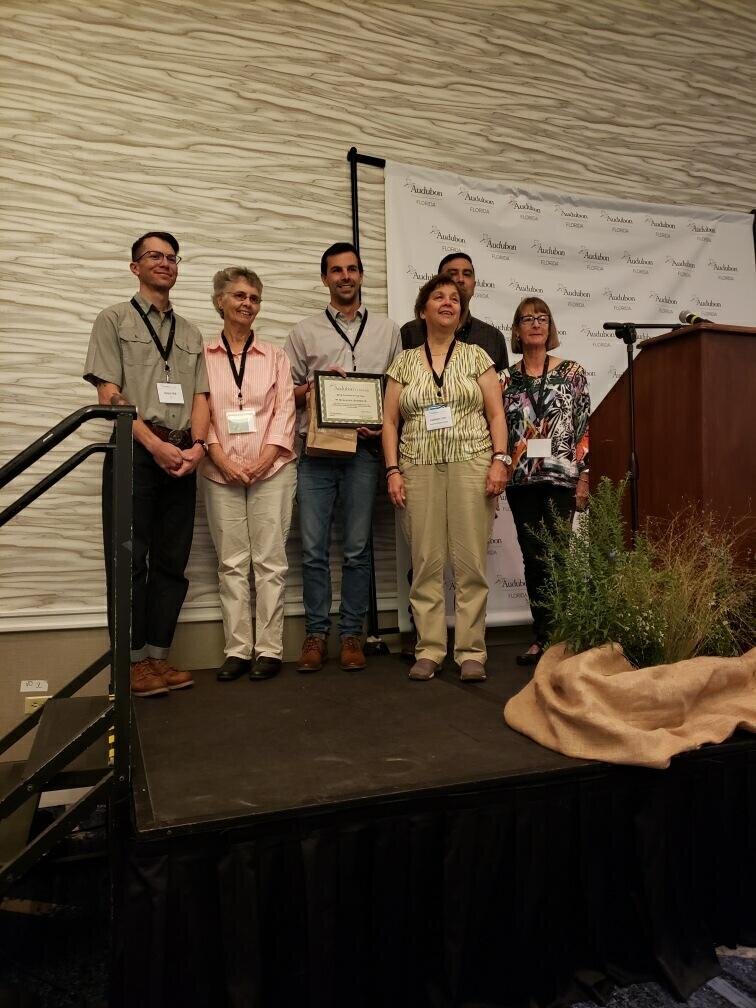
Our chapter was recently recognized as Chapter of the Year at last month’s Florida Audubon Assembly in Gainesville. To attract a younger and more diverse population, our president Peter Kleinhenz successfully wrote three grant proposals over the last 2 years, two with National Audubon and one with Florida Power and Light.

These grants have enabled us to hire interns at both FSU and FAMU and to purchase native plants to revegetate the shoreline and uplands at Lake Elberta Park on Lake Bradford Road just south of Gaines Street. We have worked cooperatively with Tallahassee Parks and Recreation as well as the surrounding neighborhoods.

0-3.jpg

Last Sunday I volunteered at a planting event organized by our current two interns, Harbria Gardner from FAMU and Nelson Ball from FSU. I couldn’t have been more impressed by their planning and execution. Sixteen volunteers planted over 200 wildflowers in less than 3 hours. A job well done!

A bald eagle flew over the lake, 2 wood storks probed its edges and a small group of ruddy ducks swam by as we worked. Harbria and Nelson are planning more workdays and have already conducted an invasive plant removal event at the park.

Lake Elberta Wildflower Planting Workday. Photo by Harbria Gardner

Lake Elberta Wildflower Planting Workday. Photo by Harbria Gardner

Lake Elberta is just one of our habitat improvement and environmental education programs. A small team of volunteers formed a Bird Club that meets every other week with the afterschool program at Pineview Elementary School. We also support environmental education programs at St. Marks National Wildlife Refuge by providing funding for buses at Title 1 schools and provide Audubon Adventure kits for interested teachers.

We hold monthly program meetings that are informative and uplifting. Our next program on Nov. 21 is for pure enjoyment of birds – “Two Seasons Birding in Japan” with Bernie and Chris Grossman. We all know that Japan is an industrialized, first world country made up of several islands off the coast of Asia. Most of us don’t realize that these islands are quite mountainous and forested with the human population concentrated in a relatively small portion of the land. This makes for excellent birding.

Join accomplished photographer Bernie Grossman and his wife Chris to learn about the birds of Japan and their habitats in two different seasons. You do not have to be a member to attend an Audubon program.

If you find the news of declining bird populations daunting, get involved by attending one of our interesting programs, birding field trips, or volunteer with the interns at Lake Elberta. You will be most welcome.

A Report from the Audubon Assembly

By Ben Rangel

The 2019 Florida Audubon Assembly was held October 24--26 in Gainesville, and this year Apalachee Audubon board members Kathleen Carr, Donna Legare, Ben Rangel, along with our President, Peter Kleinhenz, and one of our Lake Elberta Project interns, Nelson Ball, were in attendance. Our board representatives came away from the Assembly inspired by a weekend of networking, learning sessions, award ceremonies, and, of course, birding.

The theme of this year’s assembly was “Water and Land for Florida’s Future: Science-based Strategies for Clean Water and Healthy Watersheds” and the events of the weekend mirrored this important topic. The Friday morning birding field trips were located near water: Kathleen and Ben visited Bolen Bluff, an oak hammock on the south side of the Paynes Prairie’s Alachua Lake; Donna and Nelson birded at La Chua Trail, located on a boardwalk along a flooded sinkhole; and Peter went to Sweetwater Wetlands, which is Gainesville’s waste water treatment wetland. Those that visited Bolen Bluff saw a yellow-billed cuckoo, a barred owl, a white-eyed vireo, and many types of warblers, including black-and-white, hooded, and many American redstarts. At La Chua, Donna and Nelson also saw a yellow-billed cuckoo, many limpkins, various warblers, a bald eagle, and several snail kites. Peter saw over ten limpkins, six snail kites, and two American bitterns. These birding hotspots allowed our members to see several “lifers”, but also offered up various birds of the typical fare.

IMG_7694.JPG

The birding field trips were followed by a series of learning sessions related to the Assembly’s theme. Our members chose to attend two different sessions: one entitled “Treatment Wetlands: Bird Habitat that Improves Water Quality”, and another called “Trees, Cows, and Wetlands: The Role of Agriculture in Florida’s Watersheds”. At the “Treatment Wetlands” session, attendees learned about the role of places like Sweetwater, where municipalities have chosen to treat their wastewater through the “green infrastructure” of human-designed wetlands, which also offer the benefits of wildlife habitats, public recreation, and educational opportunities. The “Trees, Cows, and Wetlands” learning session gave an eye-opening look at how agriculture affects Florida watersheds, and the current issues of preventing agricultural lands from turning into urban development, eco-friendlier agriculture technologies, and working with farmers, ranchers and timber companies to increase conservations easements.

Throughout these events, Nelson, Donna and Peter also participated in the Assembly’s Conservation Leadership Initiative. The CLI brings together Audubon leaders working within conservation-minded fields with some of the best college students in the state in a mentorship opportunity. Donna and Peter participated as mentors, and Nelson was selected as a scholarship recipient in this highly competitive program. Nelson’s acceptance into the program shows that our chapter has done an excellent job of selecting interns who will go on to be leaders in conservation fields.

At the Friday evening banquet, there were many significant awards given out to individuals and organizations across the state who have gone above and beyond to protect Florida’s environment. Attendees also heard from the first Chief Science Officer of the State of Florida, Dr. Thomas Frazer, and his work with the Governor and the Department of Environmental Protection to use sound science for protecting and improving the state’s water quality and environment.

IMG_7695.JPG

The highlight of the weekend for our chapter occurred during the Saturday morning Chapters’ Celebration. Apalachee Audubon was named Chapter of the Year, and our attending members were honored to stand on stage in front of representatives of chapters across the state to express our gratitude to all the members, donors, leadership, and volunteers who have made our chapter so great. After our representatives accepted the award, Jacqui Sulek, Chapter Conservation Manager for Florida Audubon, made a point to emphasize the great work that has been done with our Lake Elberta Project, and that we had found such strong leadership in our President, Peter Kleinhenz.

We would not have been named Chapter of the Year were it not for our membership and their generous donations which support the projects our chapter undertakes. We continue to need your support. The Lake Elberta Project is reaching a critical point where native plants are attracting large amounts of pollinators and birds. We need funding for the next few seasons to increase our planting areas. It’s not hard to imagine the lake being surrounded by native plants and devoid of invasives, and becoming the number one birding spot in Leon County. Also, the chapter made the decision to pay our interns, as they do a huge amount of work planning events, meeting with the city, advertising our chapter, and preparing to become future leaders of our organization. Past donors have earmarked donations to be used to support the interns or buy plants for Lake Elberta.

To make a donation directly to our chapter, please visit the “Get Involved” tab on our website at https://www.apalachee.org/

Tips on Preserving Nature While Cycling In A Park

Cycling is one of the healthiest forms of physical activity. While cycling is a great wayreduce your environmental footprint by commuting, it’s still possible to damage the environment while cycling if you’re not careful when you ride through parks. Here are some top tips you can keep in mind next time you’re cycling in a park to ensure that generations to come can always enjoy the outdoors on a bike.

 Tip #1: Ride Clean

 You should always wash off your bike after a ride and ensure there’s no mud stuck in your tracks. If your bike is covered in mud, it’s also likely covered in seeds from local plant life. If you don’t wash off your bike before traveling to the next park or trail you run the risk of transferring a different species of plant life from one region to another. This can wreak havoc on the local eco system!

Tip #2: Mind the Brakes

When you brake hard you’ll cut large divots into the ground, which will not only tear up plant life but also potentially cause erosion when it rains. It’s much better to ride a little slower than usual and use your brakes sparingly. This is especially true when you’re on a slope!

Tip #3: Stay on the Trail

This may seem self-explanatory, but you’ll always want to stay on a trail when you’re cycling in a park. Trails are there for a reason—they’re maintained every year so you can cycle safely without damaging any local flora. When you ride off of a trail you also run a higher risk of injuring yourself by traveling over uneven terrain.

Tip #4: Leave the Wildlife Alone

While it’s possible you’ll see nothing other than squirrels, you may come across larger critters when you’re cycling through a park. You may also see horseback riders on a trail. Animals can be easily startled by quick movement or loud noises, so be sure to give wildlife a safe distance for the welfare of the animal.

Tip #5: Yield to Hikers

Unless you’re on a cycling-only trail, you should always yield to walkers, hikers, or other travelers off a bicycle. You should also alert other trail users to your approach with a yell or a ding of your bell. You should also always stay in complete control of your bicycle and never be riding at a speed that’s too dangerous for your own skill and abilities.

Tip #6: Leave No Trace

You should never leave trash behind on a trail, even if it’s something that’s compostable. When you’re on the trail, consider picking up trash or fallen logs that are in the way so future cyclists can enjoy the ride. An ounce of prevention is worth a pound of cure!

*This article was created by Personal Injury Help (www.personalinjury-law.com,) an organization dedicated to providing the public with information about personal injury and safety information. Nothing in this article should be construed as legal advice, and it is intended for informational use only. Be sure to review your local cycling ordinances to ensure you ride safe and legally.

A Nice Day To Spy A Kite

By Peter Kleinhenz

Photos by Derek Dunlop     

snailkite1_derekdunlop.JPG

            Last Saturday, Apalachee Audubon went a bit further afield for its field trip. The destination was the Gainesville area, the new home of several snail kites that have set up shop in some of its marshes and wet prairies. About 15 of us car-pooled down there early Saturday and first stopped at Sweetwater Wetlands Park.

                Jacqui Sulek, conservation chapter coordinator for Florida Audubon, met us at the trailhead and gave us the back story on this incredible piece of property. Essentially, the city of Gainesville had the option of building a large water treatment plant or, for half the cost, could build a wetland to filter water. They chose the latter option and, now, a birding hotspot exists that draws people from all over Florida and beyond.

redwings_derekdunlop.JPG

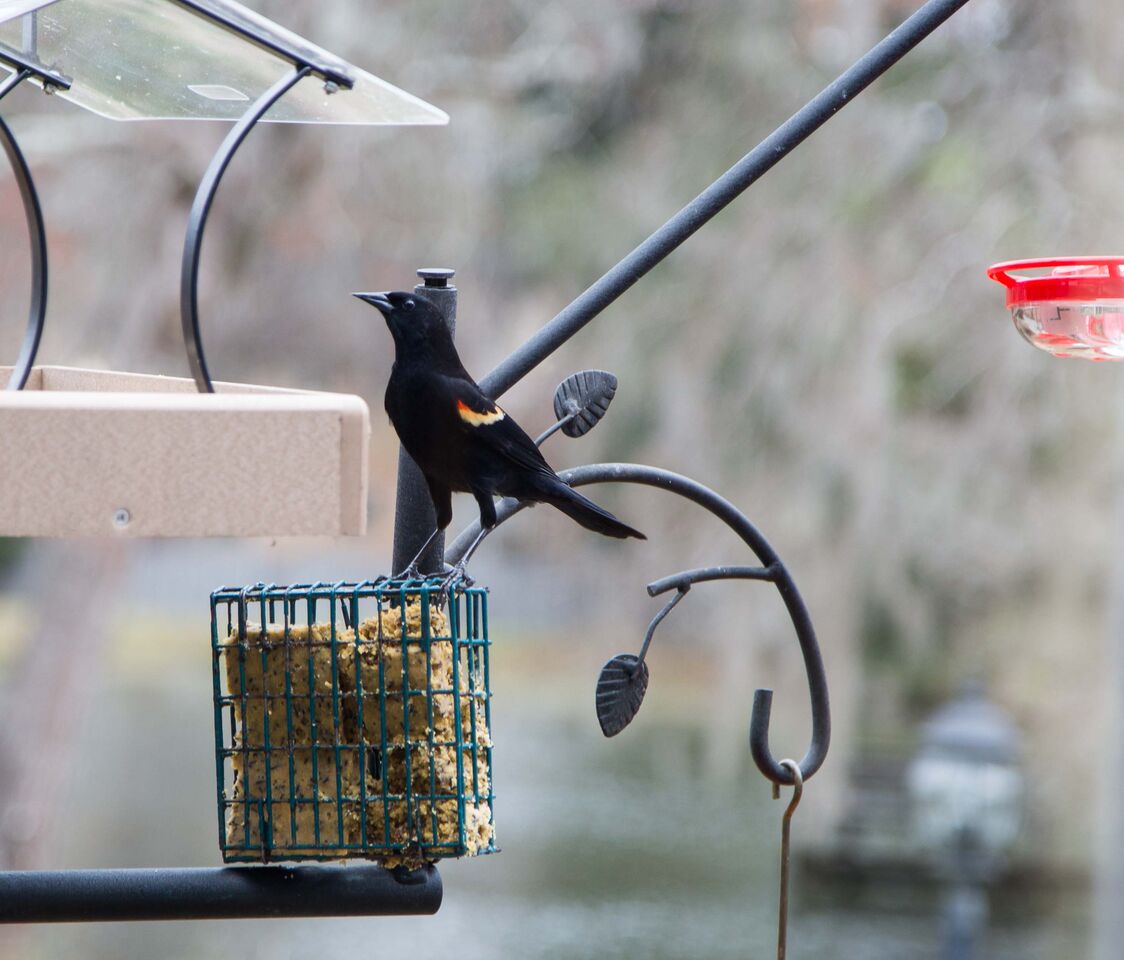
                We hit the boardwalk and began scanning. Red-winged blackbirds and grackles made appearances, as did several young gallinules. I tried hard to turn these into more uncommon soras or king rails but eventually learned to just appreciate these cute relatives for what they were. My friend, Derek, had brought his massive telephoto lens but still made sure to search up close in case any critters were scurrying near the boardwalk. Our efforts paid off. A striped crayfish snake, a secretive species not frequently seen, was spotted basking on a clump of vegetation. But snakes weren’t the target and our eyes were trained upward from that point forward.

                At an overlook towards the end of the boardwalk, we scanned for birds. A couple egrets and limpkins were located off in the distance, and plenty of both common and purple gallinules made appearances. Then, someone yelled out, “Look out there” and pointed towards a distant tree line. A bird flew over the water with a whitish tail, leading most of us to immediately think “Northern Harrier”. We then thought that our eyes may be playing tricks on us and that this was an osprey. Both options were incorrect.

                It wasn’t until the bird sat on a tree limb that we confidently identified this raptor. The orange legs gave it away. We were looking at a snail kite!

snailkite_derekdunlop.JPG

                We meandered around the outer trail, admiring close-up sandhill cranes and limpkins. Our overall goal, however, was to get a better look at the kite. We eventually reached the ditch across from the trees where we had seen the kite earlier. After a brief period of waiting, not only one but two snail kites flew towards us. We observed one repeatedly dive down to snatch snails and another later joined the fun. We all were able to get very close views of these rare birds, an uncommon feat given their usual habitat of flying out over inaccessible marshes.

                All of us were thrilled and I think I can speak for all of us when I say I’m thankful that a place like Sweetwater Wetlands exists. Nine individual snail kites now live in Alachua County, with at least two occupying a wetland that didn’t even exist not long ago. What a treat to see these birds so close to Tallahassee. Maybe one day they’ll call Leon County home.

Old Growth Pinelands in Florida State Parks

Oldgrowth Longleaf 2017 (1).jpg

by Jim Stevenson

Old growth pine forests - longleaf and slash - are pines that were mostly cut by the early 1930s, although we still have a few examples in Florida.   The old trees in old growth forests can be 100 to 500 years old but ground cover conditions are as important- if not more so --than tree age.  The presence of red-cockaded woodpeckers is an additional indicator of old growth.  Today, a flat-topped, turpentined longleaf can occasionally be found that has survived lightning, wildfire and man.  By good fortune, Florida state parks have some of these old relic trees that have survived.

Due to park policy and tradition, timbering of native pines has not been allowed in state parks for over 80 years.  Old growth forests can be reestablished in our state parks.  This is how we can do it:

  • Inventory the oldest longleaf and slash pines having native ground cover.
  • No cutting of pines occurring naturally on their native soils except when restoration thinning is necessary because of fire exclusion.
  • Special care is required to reintroduce fire to stands having old pines.
  • No plowing or other damage to native ground cover.
  • Conduct prescribed fires at no longer than two to three-year intervals.
  • Include prescribed fires during the peak lightning season (May thru July).
  • Protect pine snags, stumps and logs.
  • Invasive hardwood trees and other introduced plants shall be promptly removed without damaging the site.
  • Continue these steps for over 100 years.

Since we expect our state and national parks to exist forever, a couple hundred years is not too long for our grasslands and pinelands to evolve to old growth.  Future generations of Floridians will commend our foresight.

From Conan to the King Building

by Peter Kleinhenz

On April 19, Apalachee Audubon had the distinct pleasure of hosting renowned National Wildlife Federation naturalist, David Mizejewski. David came to us all the way from Washington D.C., where he works at the NWF headquarters. That is, when he isn't guesting on shows like Conan and The Today Show, or when he isn't traveling the country speaking to groups like ours.

davidmizejewski_april2018program.jpg

David literally wrote the book on gardening for wildlife, Attracting Birds, Butterflies, and Other Backyard Wildlife. He shared this expertise in an hour-long program at the King Building last week. David was passionate, engaging, and accessible as he spoke to a standing-room-only crowd. 

Creating backyard habitat is considered by many to be one of the best ways to conserve wildlife in this country moving forward. I mean, let's face it...development isn't going to stop any time soon. Finding harmonious ways to coexist with nature, then, presents opportunities to build populations while not compromising the beauty of your yard.

David touched on this as he offered ways to offer food, water, shelter, and places to raise young for wildlife. He suggested that planting native plants, in many ways, serves birds better than putting up bird feeders. I learned that putting up little tubes can attract native pollinators to your yard. Finally, I learned that providing water is one of the single best things you can do for native wildlife.

meetingdavid_april2018program.jpg

The National Wildlife Federation offers a certification program for wildlife friendly yards, in addition to an online store of resources to help you get your backyard habitat created or enhanced. The University of Florida IFAS program also offers a yard certification program that ensures your yard offers valuable habitat to wildlife.

The timing of this talk couldn't be better. The Florida Fish and Wildlife Conservation Commission is just beginning a new initiative called Backyards and Beyond. This program encourages Florida residents to create backyard wildlife habitat and document the life that results via iNaturalist. Those interested in this program can create an iNaturalist account and join the Backyards of Florida or Backyards of Leon County project. In addition, you can create your own yard project to keep track of the wildlife that visit your yard.

David probably didn't know about these other programs when he spoke. But he didn't need to. There's never a bad time to garden for wildlife. As he and I spoke prior to the program, it was very obvious that he truly cared about the subject he was to speak about. It was clear that his mission was to preach this gospel far and wide. I, for one, am very proud of Apalachee Audubon for bringing that gospel to Tallahassee.

nativenurseriestable_april2018program.jpg

This program was made possible by our friends supporting our chapter's fundraising. The Magnolia Chapter of the Florida Native Plant Society, Native Nurseries, and Sweet Pea Cafe all pitched in and helped bring David to Tallahassee. We can't thank them enough. Audubon member Nick Baldwin generously documented this event and it is his pictures that are featured here.

Next year, we plan to focus on backyard and community habitat enhancement for birds. We hope to see you at those programs and events!

boardwithdavid_april2018program.jpg

Platt Visits the Platte

by Elizabeth Platt

April 4:

The crane’s morning arrival and evening departure were magnificent.  There are an estimated 598,000 there right now!   When we arrived at the Rowe Sanctuary in the morning it was very cold in the blind from which we watched in total silence for 1 1/2 hours.  The cranes took off silently from the river where they had been standing all night.  Over time the river empties and the birds return to the fields where they spend the day eating corn left after the harvest.  Everywhere in the area (near Kearney, Nebraska) there are cranes in the fields as far as the eye can see.

In the evening when the cranes are ‘staging’ – gathering themselves at a certain area from all the fields, they make a tremendous amount of noise, which is both like squawking and murmuring.   At first there seemed only to be a few coming in pairs, then about five birds, then a long string of them, then long strings forming a curved line of birds in flight against the sky.  Little by little they meet up with other groups going in other directions.  We saw groups of thousands silhouetted against the setting sun, swirling around, getting ready to land. Then, we realized that the birds had begun to form a line right across the river.  We watched until the sun was completely gone, and there was no more light on the river.  Only then did we depart.  Still, thousands were still getting ready to fly in.

To see wonderful photos of the cranes, log on to 

https://blog.nature.org/science/2014/03/03/platte-river-nebraska-sandhill-cranes-birding/

Birdathon 2018

aucillabioblitz2.jpg


HELP OUR CHAPTER'S EFFORTS ON ENVIRONMENTAL ISSUES AND EDUCATION

Every year our chapter has to renew the  $10,000 it spends on our activities, which carry on our mission of protection of the environment through education, appreciation and conservation. The largest source of the renewed funds is from your donations for our Birdathon fundraising event.  Please consider donating or being a Birdathon team member.

OUR ENVIRONMENTAL ACTIVITIES:

Our Board  has focused this year on water issues of the Apalachicola River drainage by sponsoring speakers involved with researching the area, participating in and sponsoring the recent Apalachicola River Conference, donating to the Big Bend Environmental Forum, and funding Gulf Specimen Marine Lab efforts to save turtles rescued from the extreme cold weather. In addition, we have a presence at numerous wildlife events such as the Butterfly Festival at St. Marks Wildlife National Refuge (SMNWR), provide field trips to our members, and educate the public about environmental matters, birds, and Chapter events. 

OUR EDUCATIONAL ACTIVITIES:

This year our educational efforts included financing 5 buses for public school classes to make field trips to SMNWR. For many kids, it was a first time to even see marshes and the coast. We  introduced some southside kids to birding and also created an after-school bird club at Pineview Elementary School. Their staff and kids enjoy the bird feeder and butterfly garden we set-up and maintain with the help of Native Nurseries. We continue to offer elementary school teachers in four counties subscriptions  to the environmental education classroom kit  AUDUBON ADVENTURES. We plan to grow our educational presence in the community in 2018-2019.

BIRDATHON:

During Birdathon, usually any 24 hour period in the April spring migration season, volunteer teams try to identify as many bird species as they can.  The team members secure pledges from friends and members, either per species or by fixed amount contributions.  For example, a pledge of 50 cents a bird  might  cover the cost of one subscription to AUDUBON ADVENTURES if a team were lucky enough to identify 100 bird species. Or a flat donation of $50 would cover a subscription cost.    

WHAT CAN YOU DO?

If you would like to be on a team or sponsor a team member,  please contact Judy Goldman at Goldman@hep.fsu.edu.  Donations may be mailed to Apalachee Audubon Society at P.O. Box 1237, Tallahassee, Fl. 32302-1237.

2018 Yard Tour: A Definite Success!

by Tammy Brown

Thank you for a great 2018 Wildlife-Friendly Yards Tour!

yard tour-019_preview.jpeg

The weather was sunny and warm, and made for another wonderful tour this year.  Every yard had a constant stream of visitors throughout the day.  Having sold 137 tickets, attendance was up from last year’s rainy day, and made a very successful and fun tour.  We had had so many wonderful people working behind the scenes for months to bring it all together.  Everyone’s contributions and outstanding efforts are very much appreciated.

Special thanks to the Tallahassee Democrat for publishing our article and pictures on the front page of the Chronicle.  There is no doubt this helped increase awareness and introduced some new people to our yard tour tradition.  Another special thanks to Native Nurseries and Wild Birds Unlimited.  Once again they have graciously acted as our ticket outlets as well as promoted the event, and we couldn’t pull this off without them!

yard tour-012_preview.jpeg

Our deep appreciation goes to our five outstanding yard hosts this year, who shared their homes and knowledge with friends and strangers.  They truly went above and beyond!

Upon arriving at Pat and Mike Meredith’s, there was a steady steam of visitors up and down the back yard to the edge of Lake Jackson.  Spotting scopes, courtesy of Sally & Dean Jue, Jim Cavanagh, and Ed Woodruff, made for excellent water bird viewing.  A total of 6 Limpkins were seen throughout the day, which we would have been unable to detect them without the scopes.  Truly a unique experience!

yard tour-021_preview.jpeg

Just a short distance away in Hunter’s Crossing was Susan and Clay Thompson’s bird sanctuary.  They graciously offered inside viewing (along with snacks and drinks!) from their bird window, offering a close-up view of their feeder station with the neighborhood pond as a back-drop.  Upon arriving, a hawk was perched in a tree close by and an egret was at the water’s edge.  One of the day’s volunteers, Jake Hartung, counted 23 species of birds while he was there!

Over in Killearn Susan Cason’s yard offers a wonderful retreat for wildlife. Many feeders, nesting boxes, native plants and a water feature attract a wide variety of birds to her yard year-round.  Viewing from her back yard featured a beautiful over-all view, while meandering around the back yard offered many inviting nooks and benches to relax and enjoy the native plantings and closer view of the many songbirds in this active yard.  Susan’s knowledge and experience no doubt enhanced her guests’ visits and viewing.

yard tour-005_preview.jpeg

A quick few-minute drive to Rob Williams and Lynn Peterson’s yard in Foxcroft also yielded many native plants along with their bird feeders and baths.  Rob put together a wealth of information and an identification system for his native plants that everyone enjoyed and learned from.  Rob and Lynn’s passion, enjoyment and knowledge of native plants and trees made for plenty of interesting conversation.  Many guests also enjoyed a short walk in the woods at the back of the property, as well as the many turkey vultures that regularly gather overhead toward the end of the day.

I think a lot of us are familiar with Glenda Simmons’ home, most famous for her numerous bluebirds and orioles. Glenda was a yard host in 2011, when she had recently landscaped with native plantings.  The plants have grown beautifully and are a perfect backdrop for her bird feeding stations and bird baths, and provide areas of shelter for the numerous birds on her property.  Glenda graciously made a beautiful display of photos of all her orioles, introducing them by name.  Yes, they are named, and each one is quite fitting!  A fun ending to a wonderful day with some great people.

yard tour-010_preview.jpeg

Heartfelt thanks go to all our wonderful yard volunteers, too!  They certainly helped the visitors have a friendly and informative visit, and we couldn’t do it without you.  Our yard volunteers this year were Adrienne Ruhl, Dee Wilder, Fran Rutkovsky, Michael Tucker, JoAnne Harrington, Diane Sigler, Diane Quigg, Pat Teaf, Helen King, Jan Blue, Karen Wensing, Kathleen Carr, Judy Goldman, Jake Hartung, Ann Bruce, Holly Thomas, Sally Jue, Dean Jue, Jim Cavanagh, and Ed Woodruff.

With all the fun and success, we are already thinking about next year’s tour, so please keep it in mind if you know anyone who would be a good yard host or volunteer to be a part of this wonderful experience. 

Again, my deepest thanks to all for your contributions, each one of you was a vital part to the enjoyment and success of this year’s tour!