By Nicholas Horton for the Apalachee Audubon Society
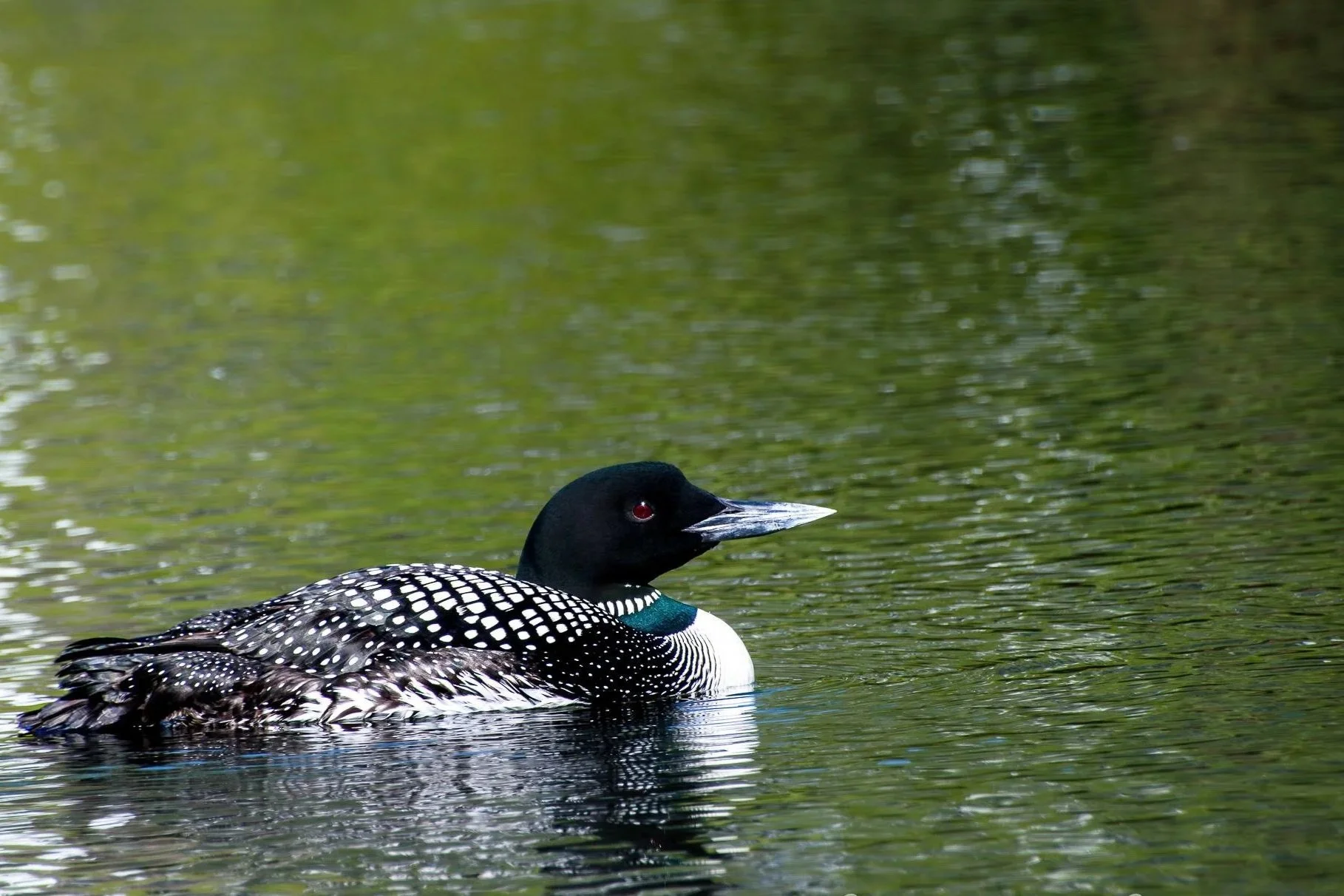
In early April 2026, many Tallahassee residents became aware of a Common Loon stranded in a Southwood stormwater pond. The bird was alert, active, and repeatedly attempting to leave the pond, but it could not get airborne. After several unsuccessful rescue efforts and continued observation, the loon was ultimately captured and released into open coastal water, where it had the space it needed to recover and continue its migration.
For many in the community, the loon’s story was compelling because it was unusual, visible, and urgent. But beyond the relief of a successful outcome, this incident also highlighted a larger lesson: when wildlife is distressed or injured, the right response depends on the species, the circumstances, and the knowledge of the people giving advice.
Why this loon was in trouble:
Common Loons are highly specialized diving birds. Unlike ducks or geese, they are poorly adapted for walking on land and require a long stretch of open water to gain enough speed for takeoff.
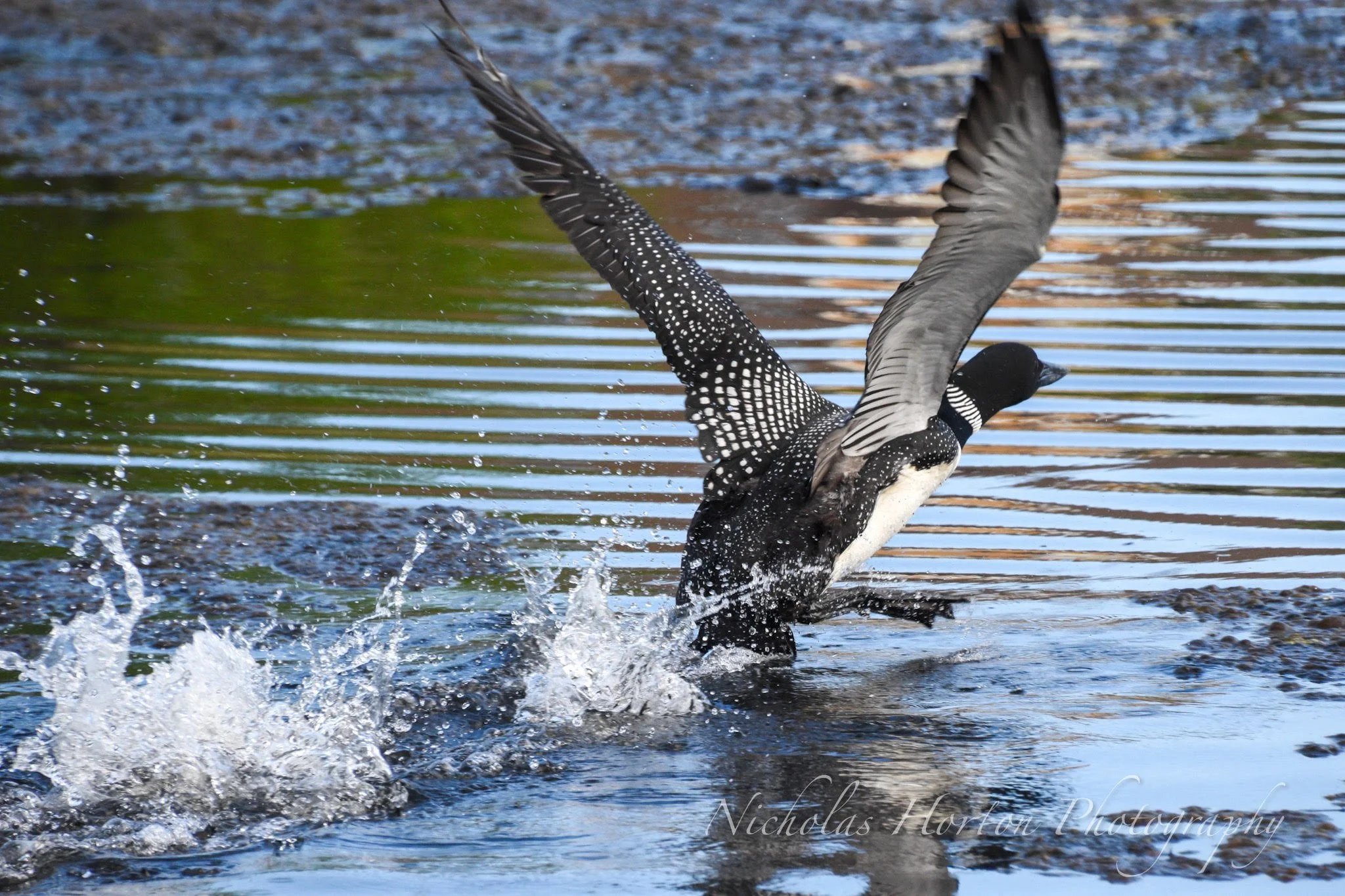
A loon can appear outwardly healthy and still be effectively trapped if it lands in or is placed in a body of water that is too small or too obstructed for flight. That is what happened in Southwood.
This loon was observed repeatedly trying to take off. Each attempt ended the same way: it could rise only briefly above the water before reaching the end of the pond and being forced back down. The surrounding houses, trees, steep banks, and limited water runway made successful departure impossible. This was not a bird simply “resting.” It was a bird trying, and failing, to escape.
How wildlife can end up in worse situations:
According to the information shared with those involved in this case, the loon was originally found stranded on land and the finder was advised to place it in the nearest body of water rather than bring it in for evaluation. That advice appears to have resulted in the bird being placed in a pond far too small for a loon to safely take off from.
This matters because a wildlife response that sounds reasonable in general can be completely wrong for a particular species.
A loon is not just another waterbird. Species-specific knowledge is essential. What may be acceptable for one kind of animal may put another in even greater danger.
Not every animal needs to be captured, but not every animal should be left alone.
One of the most important lessons from this incident is that wildlife situations are rarely simple.
It is true that capture, restraint, transport, and rehabilitation can be stressful. Unnecessary intervention can absolutely make a situation worse. But the opposite is also true: sometimes an animal that looks strong and healthy is still in serious trouble because of where it is, what it is doing, and whether it can survive or escape on its own.
In this case, the repeated failed takeoff attempts were the key. Behavior matters. Location matters. Species matters.
A bird that is visibly injured is not the only animal in need of help. An animal can also be distressed, stranded, trapped, exhausted, neurologically impaired, entangled, or unable to complete essential behaviors like feeding, flying, or escaping predators.
What people should do when they find distressed wildlife:
The public is often put in a difficult position. People want to help, but they may not know whether to intervene, wait, transport the animal, or leave it alone. That uncertainty is exactly why experienced licensed wildlife rehabilitators are so important.
When you find distressed or injured wildlife:
Do not assume the animal is fine just because it is alert or mobile.
Do not assume every animal needs immediate hands-on rescue.
Do not rely on generalized advice that ignores species differences.
Document what you are seeing as clearly as possible.
Contact a licensed wildlife rehabilitator with experience relevant to that species.
Repeated failed flight attempts, inability to stand or move normally, entanglement, drooping wings, obvious wounds, neurological signs, or unusual behavior are all major warning signs that professional guidance is needed.
A local resource the public can trust:
One clear takeaway from the Southwood loon incident is the importance of contacting wildlife professionals with practical, species-aware experience.
In our area, Florida Wild Mammal Association in Crawfordville has proven to be a trusted and highly capable resource for distressed wildlife, including waterfowl and other species that require informed assessment and appropriate intervention. In the loon’s case, experienced responders ultimately recognized that the bird could not safely leave the pond on its own and helped get it where it needed to be.
That kind of judgment matters. Wildlife deserves more than guesswork.
A better lesson to carry forward:
This loon had a good ending. It was not because the situation was simple. It was because people kept paying attention, documented what they were seeing, and continued pushing for the bird to receive the help it needed.
The bigger lesson is not just about loons. It is about all wildlife.
Compassion matters, but compassion must be matched with knowledge. Well-meaning advice can still be bad advice. A healthy-looking animal can still be in danger. And when public guidance is wrong, the consequences can fall entirely on the animal.
As birders, conservationists, and nature enthusiasts, we should encourage people to do two things: care deeply, and consult wisely.
When wildlife is truly in trouble, the right help matters.
Nicholas Horton is a board member of the Apalachee Audubon Society and was involved in leading the response to the stranded Southwood loon.