Connecting Landowners to Their Birds

It’s time to give credit where credit is due. If it were not for conservation-minded private landowners throughout the country, we would have far less wildlife. And that wildlife includes birds.

Birding in the restored longleaf pine savanna on Helen and Tom Roth's property

Birding in the restored longleaf pine savanna on Helen and Tom Roth's property

In Florida and Georgia, private lands make up the majority of both states (79% and 90.3%, respectively). Many of these lands, such as shopping malls and golf courses, are unsuitable for many declining bird species. However, millions of acres of private lands in both states are conducive to these species and, in many cases, are the deciding factor in whether or not populations can persist in an area over the long term.

With this in mind, the Tall Timbers Land Conservancy is working to empower conservation easement landowners to document the birds that occur on their properties. Tall Timbers applied for a Cornell Lab of Ornithology grant to help them achieve this goal. They have partnered with the Alachua Conservation Trust and Conservation Florida, as well as with four Audubon chapters, to link Audubon volunteers with private landowners. The idea is to have solid birders from Audubon chapters teach landowners how to identify birds and use eBird to record what they see throughout the year. Land trusts like Tall Timbers often visit properties only once per year to conduct easement monitoring visits and, even then, often are not recording every bird species that they see. Helping landowners fill in the who, when, and where for different bird species in places where surveys rarely, if ever, occur could help to augment the efforts of ornithologists.

Apalachee Audubon volunteers posing by a waterfall on Annie Schmidt's property.

Apalachee Audubon volunteers posing by a waterfall on Annie Schmidt's property.

Staring at a vesper sparrow found in a field on Guy Anglin and Jan Blue's property

Staring at a vesper sparrow found in a field on Guy Anglin and Jan Blue's property

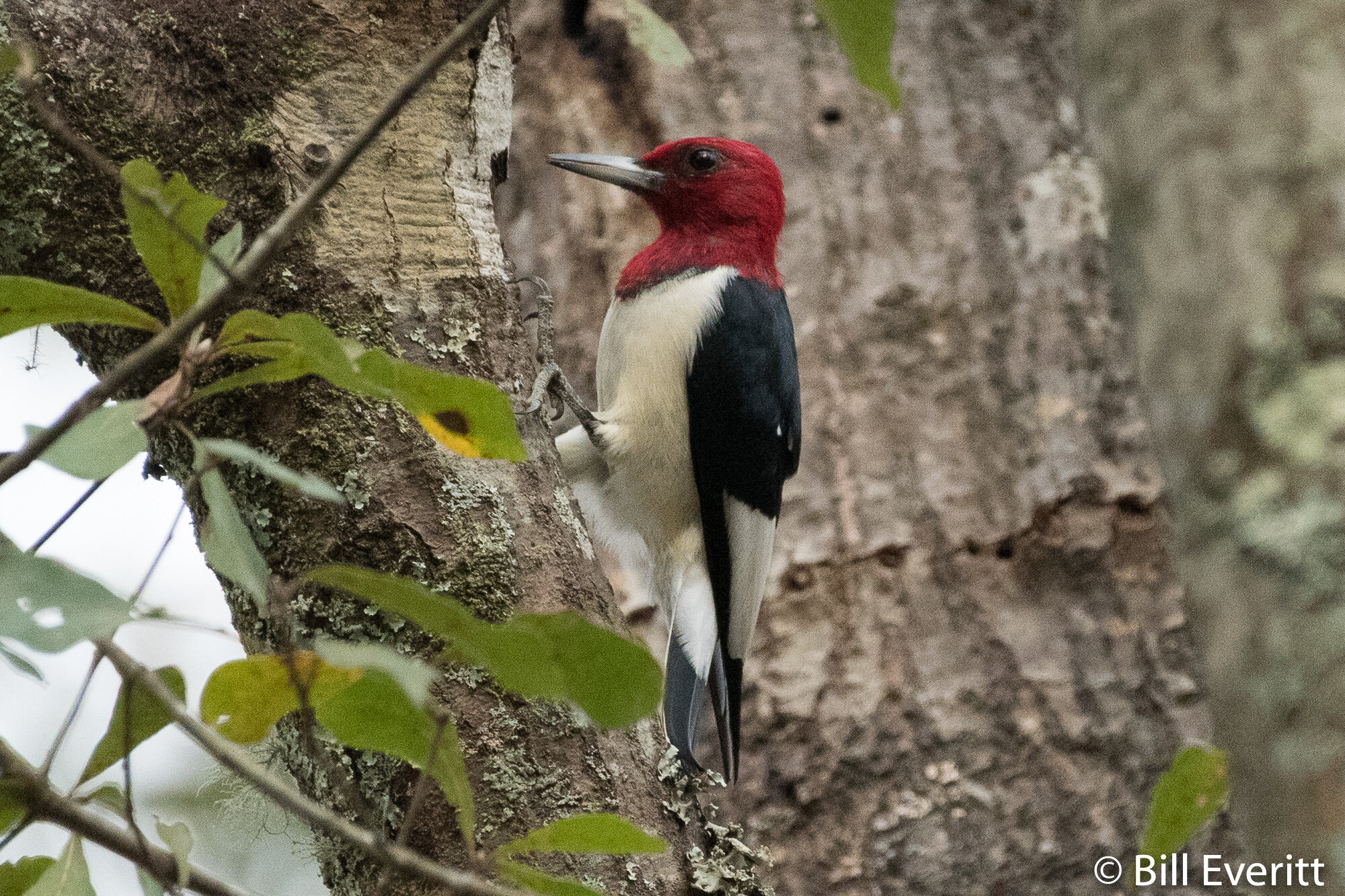
You may be wondering what this project looks like in practice. Well, the bottom line is that it’s been a lot of fun for all involved. Tall Timbers staff have conducted four landowner visits so far in partnership with Apalachee Audubon. At Hays Cummins’ and Donna McCollum’s property, participants got to watch hundreds of wading birds fly over their heads to a wetland roost at sunset. Helen and Tom Roth’s property offered the chance to see habitat restoration in action on a beautiful landscape, with a flock of gorgeous (and uncommon) purple finches providing icing on the cake. Serenading grasshopper sparrows at sunset rounded out a visit to Annie Schmidt’s property, that had already included steephead ravines, a waterfall, and salamanders. Guy Anglin and Jan Blue’s property visit resulted in great looks at a vesper sparrow, a northern harrier, bald eagles, and nesting red-headed woodpeckers.

AAS volunteers and Tall Timbers staff scanning the ephemeral wetland owned by Hays Cummins and Donna McCollum

AAS volunteers and Tall Timbers staff scanning the ephemeral wetland owned by Hays Cummins and Donna McCollum

Hays Cummins, who with his wife, Donna, owns the wading bird rookery mentioned above said, “It was a great day of fellowship and experiencing the many natural wonders of this region of Florida. It was so invigorating to be with people whose passions for the environment matched ours. Strong partnerships like this give us hope for the future of the region.”

The visits offer opportunities for Audubon members to learn more about habitat management, see the benefits of conservation easements firsthand, and experience spectacular natural habitats that they would probably never experience otherwise. They offer landowners the chance to deepen knowledge of their property and the species that occur within it, and maybe even introduce them to a new hobby.

With new birds arriving soon from places further south and more landowners showing interest in getting involved, the prospects of this project look promising. If you are interested in getting involved with the project, please contact Peter Kleinhenz at pnkleinhenz@gmail.com.

The forest next door: Take a hike on trails of the Leon County Park System

By Donna Legare

Since the pandemic, my husband, Jody, and I have been exploring new places to hike. We enjoy walking through fields and forests botanizing and observing nature in all its forms while getting fresh air and exercise.

Native swamp azalea in full fall color, sporting flower buds, at the St. Marks River Headwaters Greenway

Native swamp azalea in full fall color, sporting flower buds, at the St. Marks River Headwaters Greenway

I am thankful to live in an area of the country where there are so many forested areas. It makes me appreciate the ecosystem services that these forests provide. They protect water quality and supply, conserve soil, sequester carbon, purify air, provide habitat for wildlife and places for people to relax and be with nature.

You may be surprised to learn that there are some forests right here in Leon County that are under the management of the Leon County Parks and Recreation Department.

I have been walking the Miccosukee Greenway for years but had never heard of the Fred George Greenway Park or the St. Marks Headwaters Greenway until I contacted Leigh Davis, Director of Leon County Parks and Recreation, to ask her to speak at Apalachee Audubon Society’s January program meeting on Zoom.

She will present a program called "The Forests of the Leon County Park System." The Zoom program takes place on Thursday, Jan. 21, 2021 from 7-8 p.m. The program is free, but registration is required: https://bit.ly/3ngFbjq

Davis will share information about existing and planned trails and boardwalks in some of the forested parks under her management. She will familiarize us with her department and how it works. Davis’ public service career spans two and half decades and includes over 15 years with Leon County.

The St. Marks River Headwaters Greenway

The St. Marks River Headwaters Greenway

Jody and I have been exploring some of the trails of these forests. We were greeted one cool December morning by a Yellow-bellied Sapsucker as we started along the trail at the St. Marks Headwaters Greenway. This 755-acre park at the corner of Buck Lake Road and Baum Road, which opened in 2018, consists of old fields reverting to a mixed pine/hardwood forest as well as an intact bottomland hardwood forest.

Both forest types protect the headwaters of the St. Marks River, designated as an Outstanding Florida Water. Approximately 5000 feet of the upper waters of the St. Marks River flow through the park. I look forward to learning more about this and other forested parks in the care of our Leon County Parks and Recreation Department.

The approximately 3 miles of trails are not marked. I took a photo of the trail map at the kiosk in the parking area so we could find our way around. I would recommend taking some of the spur trails that are not on the map that take you to the wetlands that are the beginnings of the St. Marks River.

Interpretive sign found along Miccosukee Greenway informs trail users about a rare forest community.

Interpretive sign found along Miccosukee Greenway informs trail users about a rare forest community.

Visit during the winter; we tried hiking here last summer, but the mosquitos ran us out. The County plans to open more of the park to hiking trails, a boardwalk and overlook which will allow access to the wetlands.

One of our favorite woodlands is found along the Miccosukee Greenway, closest to the Crump Road entrance.

The trail will lead to a Miccosukee Road crossing and you will eventually come to an informative sign on the right side of the trail. The sign describes a now rare community of trees on 45.6 acres called the North Florida Red Oak Woods. It was once a common type of upland forest on the Red Hills of North Florida, but much was converted to farmland and now housing developments.

It is dominated by shortleaf pine, mockernut hickory, post oak, southern red oak, and black oak. Other trees include loblolly pine, rusty blackhaw, Chickasaw plum, black gum, dogwood, water oak, laurel oak, basswood, sweetgum, sassafras, white oak, sugar berry, red buckeye, Florida chinquapin, fringe tree, hawthorn, southern crab apple, red mulberry, wax myrtle, black cherry, and winged sumac.

A splash of fall color in a mixed pine/hardwood forest.

A splash of fall color in a mixed pine/hardwood forest.

This type of forest evolved with periodic fires. Prescribed burning is recommended for its management, otherwise the shade and leaf litter produced by young hardwood trees will eliminate the once abundant herbaceous ground cover and the forest will become a more common oak/hickory forest.

At Fred George Greenway Park at Fred George Road and Capital Circle Northwest, there are two miles of hiking trails on 160 acres with parking, restrooms and playing fields on another 15 acres. We mostly explored a section of giant live oaks that leads down to a wetland where a small stream flows into a sinkhole, disappearing under a pile of logs into the aquifer.

Fred George Greenway was established in 2016 to protect this and another sinkhole and the aquifer below them. The forest protects the quality of the water ensuring cleaner water in our aquifer. We also noticed evidence of prescribed burning on the longleaf pine uplands. I want to return to see the huge cypress trees that somehow escaped harvest years ago.

More well-known are the Miccosukee Canopy Road Greenway (503 acres) and the J.R. Alford Greenway (874 acres) located at the end of Pedrick Road. This is a great park for bike riding as there are 17.5 miles of trail. It is a mixture of open pasture and forested woodlands. I enjoy the slower pace of walking especially during the fall wildflower season where there are many pollinators and other insects to observe.

Birders Ann and Don Morrow reported a flock of 50 blue grosbeaks in trees at the edge of an open field in late September. As Ann and Don approached, the bright blue males and less colorful females flew across the field, enabling the count. Bring your binoculars if you visit this park. One trail leads to the spectacular pedestrian bridge that connects this greenway to the Lafayette Heritage Trail.

Building your eBirding Skills to Help Birds

November 19, 2020 Program Webinar

Click to view webinar on YouTube (program starts about 7 minutes into the video)

eBird is one of the largest biodiversity-related science databases and has become a staple of birders worldwide. Users upload checklists of birds, explore sightings, keep track of their life lists, and much more. eBird is also used in conservation, helping scientists understand species' distributions, habitat use, and abundances.

In this webinar, Peter Kleinhenz and Heather Levy discuss what everyone from the beginner birder to the expert needs to know to successfully utilize eBird and provide direct examples of how eBird has informed science. There will be opportunities to win prizes for those that participate!

Program Speakers

Heather Levy

Board Director, Apalachee Audubon Society

For Heather, one of the most attractive qualities of birding is its inherent ability to bring nature into even the most urban of areas. Through that first attraction, whether it be charismatic behavior or striking plumage, Heather believe that people become more mindful of the environment and the intricate and interconnected role that individual plays within the larger ecosystem. The more aware people become about our surrounding environment, the more they value it and work to conserve it.

levy.heather789@gmail.com

Peter Kleinhenz

Board Director & Past-President, Apalachee Audubon Society

Nothing inspires Peter like nature. For his entire life, he has been seeking nature out every chance he gets. Throughout his exploration, Peter has been struck by the harsh reality that so much of the natural world is disappearing. Peter devoted his life to telling others about the natural world, hoping to inspire them to care enough about it to protect it.

pnkleinhenz@gmail.com

Make Your Own Birdsaver to Prevent Birds from Hitting Your Window

By AAS member Ann Morrow

During these challenging Covid-19 times, many of us are spending more time in our homes and yards. It is no wonder that interest in home-based activities such as birdwatching and gardening has soared in the last 6 months. Even veteran birders and gardeners have honed their skills, expanded their species yard lists, and enjoyed new sights and sounds in backyard habitats.  

In our 1/3-acre suburban lot, my husband and I are more acutely aware of the subtle progression of seasons simply by being at home continuously through spring and summer. We have watched plants bloom and set fruit. We have noted bird migration and watched resident birds find mates, build nests, and raise young. We have also noted a few less-desirable sightings: frequent patrols by free-roaming cats and, the focus of this article, window/bird collisions.

We do not think the collisions are common at our house, but the unmistakable thud as a bird strikes a window is deeply disturbing whenever it happens. Last year a Swainson’s thrush, a species seen solely during migration in North Florida, died after hitting our large living room window. We think of our yard as a safe spot for migrants to rest and refuel, so it was indeed a sad day. Other victims include cardinals, titmice, and Carolina wrens. The most recent strike was a red-bellied woodpecker. It hit the window and landed upside down in a large planter. It flew off after 20 minutes and we hope it did not later die from internal injuries, a common outcome after window strikes.

Estimates vary, but it is safe to say that hundreds of millions of birds die each year from window collisions in the United States. The good news is that researchers have devised several simple and inexpensive solutions. We applied bird stickers designed as collision deterrents on one of our smaller windows. For the large living room window, we opted for the Acopian Birdsavers (www.birdsavers.com). Designed by a family of engineer/naturalists in Pennsylvania, Birdsavers consist of a curtain of vertical strands of paracord (1/8” diameter parachute cord), spaced about 4” apart and hung on the outside of windows. The cords break up reflections of vegetation and sky so that birds perceive the window as a solid object to avoid. Because many people find the Birdsavers products to be aesthetically pleasing, they are also called Zen wind curtains. They are used in a variety of commercial and residential settings.

You can order custom Birdsavers or buy the inexpensive materials and follow excellent do-it-yourself instructions. We made our own for our large front window (approx. 8’w x 4’h). We spent about $12 on materials: 100 feet of olive drab paracord ordered online (Made in the USA) and a 10-foot section of vinyl J-channel (optional) from Home Depot. We are pleased with the result and will test its effectiveness over the coming months. This simple fix is a good addition to our other yard management practices: avoiding the use of pesticides, providing a source of clean water, and planting a diversity of native plants for food and cover. We hope we can give birds and other wildlife a fighting chance in our small slice of habitat.

Pictured below: Ann and Don Morrow’s birdsaver window and Donna Legare and Jody Walthall’s birdsaver window

BirdsaverParacordEllicott.JPG

Disability Sensitivity, Accessibility, & Inclusion

Click to view webinar on YouTube

Our October 15, 2020 program meeting featured speaker David Jones of the Florida Disabled Outdoors Association. David spoke on the importance of opening outdoor recreation to all people, no matter their abilities. His eye-opening presentation reveals  issues that most who engage in outdoor recreation, including birding and wildlife viewing, may have never considered.

It is rare that someone can take a “tragedy” as an opportunity to change their life and help others. That is exactly what David Jones did. His injury became a personal commitment to help others. In 1988, David Jones was shot in a hunting accident resulting in a serious head injury that left him with permanent paralysis of his left leg, limiting mobility and eliminating the use of his left hand. David utilized a wheelchair for one year, then gradually increased mobility to the point where he could walk with a walker and now walks with a slight limp without any device. He remains paralyzed in one arm. In the process of his rehabilitation, he became aware of the importance of recreation for rehabilitation – not only to improve mobility, but to improve mental well-being. David saw this event in his life as a challenge and an opportunity to assist others. This life-changing event developed into his personal crusade.

YouTube Video of Rob Williams Yard Tour

Rob Williams Yard Tour

Click to see the yard tour Video

This is a tour of Apalachee Audubon member Rob Williams' yard, which he has been transforming from a traditional landscaped yard of lawn and ornamental plants to one dominated by native trees, shrubs and wildflowers. Rob reminds us to plant native plants, especially keystone species, and insects will find them and prosper. The insects, especially caterpillars, in turn become high quality protein for birds and other wildlife. His conservation plantings build healthy food webs and provide abundant nectar for pollinators.

This is a follow up to a webinar by Doug Tallamy about birds and native plants--A Guide to Restore the Little Things that Run the World--presented in September to Florida Audubon chapters. 

Dr. Doug Tallamy is a renowned entomologist, bestselling author and a great speaker. He is currently a professor at the University of Delaware’s Department of Entomology and Wildlife Ecology and has taught insect related courses for 40 years. Chief among his research goals is a better understanding of the many ways insects interact with plants and how such interactions determine the diversity of animal communities, especially birds. Doug's books Bringing Nature Home (2007) and Nature's Best Hope (2020) are New York Times Best Sellers.

Doug Tallamy Presentation

If you missed the September 22, 2020 presentation, Restoring the Little Things that Run the World, by Doug Tallamy, here is the link to the recording in YouTube. In this free Audubon Florida webinar, he discusses the critical relationship between native plants and birds, and give us tips for how to support nature in our own yards. This presentation was sponsored by the Venice Area Audubon Society and Audubon’s Plants for Birds program.

Restoring the Little Things that Run the World

DougTallamy.jpg

Doug Tallamy is the author of Bringing Nature Home and Nature’s Best Hope.

A community effort blossoms at Lake Elberta park

By Nelson Ball, article for the Tallahassee Democrat

Native wildflowers along the path on the West side of Lake Elberta. (Photo: Nelson Ball)

Native wildflowers along the path on the West side of Lake Elberta. (Photo: Nelson Ball)

For more than a decade, Lake Elberta Park has been enjoyed by walkers, joggers, cyclists, birdwatchers, dog walkers and more. Many years of teamwork between the city of Tallahassee, local organizations and individual volunteers transformed what began as just another ordinary stormwater retention pond into the beautiful park that exists today.

Recently, the Apalachee Audubon Society entered an agreement with the city to allow us to continue to enhance wildlife habitat around the lake. Our collective goal is to, not only provide a great place for wildlife, but to inspire and encourage more people to come and enjoy the park.

In order to make the park more inviting to wildlife that calls this region home, our first focus was establishing as many native plant species as we could. Native plants, such as some species of hibiscus, coneflower and tickseed (the state wildflower of Florida), are those plants that would have been found in this area long before humans arrived.

Native wildflowers along the path on the West side of Lake Elberta. (Photo: Nelson Ball)

Native wildflowers along the path on the West side of Lake Elberta. (Photo: Nelson Ball)

Animals in this region have co-evolved with these plant species, so they know which ones produce food for them to eat, which ones provide food for their prey, which make good homes, and so on. Apalachee Audubon Society knew that we had to provide these resources in order to convince native wildlife, such as great crested flycatchers, hooded mergansers and Florida softshell turtles to frequent the park.

Over the last year, our project has been fortunate to receive hours and hours of help from employees of the city of Tallahassee. Dozens of dedicated volunteers from the communities surrounding Lake Elberta Park, both major universities, the Apalachee Audubon Society membership, and other local organizations have also helped us realize our goals.

With their hard work and dedication — and thanks to funding through grants from National Audubon Society and Florida Power & Light, as well as generous donations from Chuck and Vicky McClure, Amelia Fusaro and Bill Everitt — huge strides have been made in beautifying the park and making it a suitable place for wildlife.

Apalachee Audubon Society was able to hire interns for a second consecutive year, one each from Florida A&M University and Florida State University, to take the lead with coordinating events and volunteer work days at the park. The volunteers have planted hundreds of native plants, maintained our existing native wildflower beds and removed countless invasive plants.

They have also removed mountains of garbage from the park and provided cozy nesting boxes for several bird species, such as eastern bluebirds, wood ducks and purple martins. Recently, two wood duck nesting boxes were installed around the edge of the lake, thanks to a donation of materials from the Florida Fish and Wildlife Conservation Commission.

Both wood duck boxes successfully fledged ducklings only a few weeks after they were installed!

Photo: Native wildflowers along the path on the West side of Lake Elberta. (Photo: Nelson Ball)

Photo: Native wildflowers along the path on the West side of Lake Elberta. (Photo: Nelson Ball)

With the assistance of a group of enthusiastic kids from the after school program at Walker Ford Community Center, the purple martin nesting gourds were prepared in hopes that the birds would return for this year’s nesting season.

After a few weeks, we invited our helpers to come back out and go birdwatching with us. They were so excited to see that their hard work was paying off: the martins were back!

While we were out with our binoculars, some otters decided to put on a show. Every few minutes one would dive down and return to the surface with a small catfish to snack on. I’m not sure who was having more fun, the otters or the audience.

It’s been incredible to witness and enjoy all the changes that have taken place at Lake Elberta since I moved here in 2005. The once boring stormwater pond has been transformed into one of the most beautiful parks and best wildlife viewing destinations in the county.

I am thrilled with the progress at Lake Elberta and believe things will only get better. If you haven’t been, go visit Lake Elberta Park on Lake Bradford Road as soon as you can. During this time of year, many of the wildflowers are blooming and young birds can be seen around the park. My visits there never disappoint.


Nelson Ball is currently pursuing an undergraduate degree in biological science at Florida State University. He is a former intern for the Apalachee Audubon Society and now serves on the Board of Directors.

Backyard buffet: Plant native and become a biodiversity hero

A white peacock butterfly on a native frostweed flower. (Photo: David Moynahan/ Florida Fish and Wildlife Conservation Commission.)

A white peacock butterfly on a native frostweed flower. (Photo: David Moynahan/ Florida Fish and Wildlife Conservation Commission.)

By: Kathryn Ziewitz (Executive Director of the FAMU’S Sustainability Institute) She can be reached at kathryn.ziewitz@famu.edu. This is a “Greening Our Community” article, an initiative of Sustainable Tallahassee. Learn more at www.SustainableTallahassee.org.

Are you looking for good news about the environment?

You need look no further than your yard. Read on to get a sneak preview of the lecture to be presented by best-selling author Dr. Douglas Tallamy, “The Insect-Native Plant Connection: How You Can Sustain Wildlife with Native Plants.” The talk will be March 19, at the Florida Blue Auditorium on the FAMU campus. Mark your calendar!

So, what’s the big deal about native plants? Many of us know that choosing native plants helps our environment. Adapted to our locale, native plants often require less water, fertilizer, and general babying than exotics that may have originated continents away.

However, there’s way more to the story. It’s the bugs that these plants co-evolved with which are absolutely critical. Without the ecological foundation of native plants to supply food for native insects, the food web that evolved over the eons to support the full range of native wildlife is compromised.Birds like this red-headed woodpecker, now uncommon and local in many regions, depend on vast quantities of insects to survive. (Photo: David Moynahan/Florida Fish and Wildlife Conservation Commission.)

It turns out that insects and spiders that inconspicuously make their living on our plants are the mainstay food source for almost all birds, as well as other wildlife, from frogs and turtles to bats. A tiny hummingbird alone may consume as many as 2,000 insects a day. Without these unsung arthropod heroes we run the risk of species going from plentiful to rare, or worse, dying out in plain sight in our localities and under our watch.

Azaleas, crape myrtles, and other non-native plants might be pretty, but their foliage doesn’t do much to feed our native insects, meaning that they pass along little to no energy up the food web to support hungry wildlife.

Whereas the oak family supports up to 517 species of Lepidoptera (butterflies and moths), a crape myrtle supports little or no native bugs because it evolved in China with an entirely different set of insects. All the sunlight, water, and care it receives becomes an ecological dead-end – a pretty face that offers little to our wildlife.

If we desire a future where we can watch bluebirds hunting insects, hear the hoots of owls at night and woodpeckers by day, and spy a brightly colored skink burrowing into underbrush, we must deliberately create a habitat that’s more delicious to the native bugs that in turn support almost everything else.Diverse native plantings support biodiversity and create wonder.

(Photo: Florida Fish and Wildlife Conservation Commission.)

We can’t rely solely on conservation lands. For creatures that add color, sound, and joy to our daily lives and that we very likely take for granted, there is a shrinking inventory of habitat “out there.” To a surprising extent, the responsibility for ensuring biodiversity has landed squarely in our own backyards.

We can recreate the habitat that teems with the biodiversity inherent to our region by aggressively planting natives in every category: trees, shrubs, perennials, groundcovers, and vines. What we do in our backyards is directly related to the fate of the next generations of everything — from hummingbirds to owls to butterflies, box turtles, bats, and native bees, katydids, and luna moths.

Arriving at a native landscape happens in steps as time, opportunity, and money permit. Consider starting by creating a buffer of natives around the property line. At the same time, do the hard work of removing invasive non-native plants, such as coral ardesia, that choke out space.

A diversity of native understory plants, including blood root, trillium, and columbine, grace a shady backyard. (Photo: Photo by Kathryn Ziewitz.)

In my average-sized and predominantly shady yard, I’m eradicating camphor, ligustrum, nandina, and wisteria and replacing these with redbuds, service berry, and Chickasaw plum. Goodbye azaleas and ginger, and hello to blueberries, wax myrtle, firebush, beauty berry, Joe Pye weed, and even goldenrod (it actually doesn’t make you sneeze).

In the far reaches of my back yard will be pokeweed and swamp sunflowers. Elsewhere, coontie is replacing liriope and Carolina jessamine instead of Asiatic jasmine. For the butterflies and moths, I’ll plant a slew of purple passion vines and native milkweeds, and maybe a hop tree. These natives are host plants used for larval food and laying eggs, meaning they are essential for rearing the next generation of insects instead of just serving as nectar sources like zinnias or buddleia.

I’m keeping pines that provide thousands of square feet of vertical habitat to support everything from nuthatches and woodpeckers to crickets and zany squirrels. Live oaks, magnolias, sweetgums, and cedars are bastions of biodiversity that should be cherished and grown where space permits.Procuring these natives doesn’t always involve expense. Some plants can be grown from seed or slips shared by friends; others may be close at hand. Lyreleaf sage, spiderwort, and other gems may emerge from lawns that are allowed to become diverse. This year, I received a native service berry for free — including the effort of planting —from the city’s Adopt a Tree program.

So, join me in keeping the magic that is biodiversity. When you get the spring urge to plant, choose plants that keep the magic going.

What: Lecture by best-selling author Dr. Douglas Tallamy When: Thursday, March 19; reception and book signing begin at 6:30 with the lecture at 7:15 p.m. Location: TBA - see event link below for further details.

https://www.apalachee.org/chapter-programs/2020/3/19/the-insectnative-plant-connection-how-you-can-sustain-wildlife-with-native-plants-with-dr-doug-tallamy-author-and-entomology-professor-university-of-delaware


You're Getting Warmer: Climate Change and its Impacts on Local Birds

By Don Morrow

As a Big Bend birder, I have seen a lot of changes in birding opportunities since I first moved here in 1983. Some things are obvious and visible. The area’s population has doubled, resulting in more roads, homes, businesses and less habitat for birds. Fortunately, as we have grown, we have had the wisdom to set aside key sites as publicly accessible open space; Lake Overstreet, Piney Z and others. I have always seen bird protection as a simple matter of land protection. You save habitat; you save birds. Problem solved.

However, other invisible changes have been happening during my thirty-six years here that are causing me to rethink my simple idea that saving land is enough. The average global temperature has increased by half a percent and the rate of that temperature increase is getting faster and is forecast to continue to do so. As the climate changes, the Big Bend will see changes that cannot be fixed by preserving more land.

Screen Shot 2019-11-20 at 10.32.54 AM.png

A recent paper by the National Audubon Society, Survival by Degrees: 389 Bird Species on the Brink (https://www.audubon.org/climate/survivalbydegrees/) details some of the ways that temperature increases that we could see by mid-century will affect the Big Bend. We will lose coastal marshes to sea level rise. We can expect to see an increase in the frequency and magnitude of spring droughts even as we experience heavier than normal rain and flooding at other times of the year. We are already experiencing some of these effects. All of this will have an impact on our local birds.

The Audubon report has an interactive tool that allows you to see at the state or even zip code level which species of birds will be affected. Some of the impacts on familiar birds are unsettling. Nine species that we think of as “our birds” will be lost as they shift their breeding range further North.

I have Brown Thrashers in my back yard. These long-tailed cousins of the local Mockingbirds are also mimics. They are rufous-brown above with brown-streaked breasts. They can out sing any Mockingbird and one was reported to have learned over a thousand songs. I am not sure that my local pair is that accomplished, but I still enjoy listening to them sing in the Spring, but with even moderate temperature rise, they will be gone.

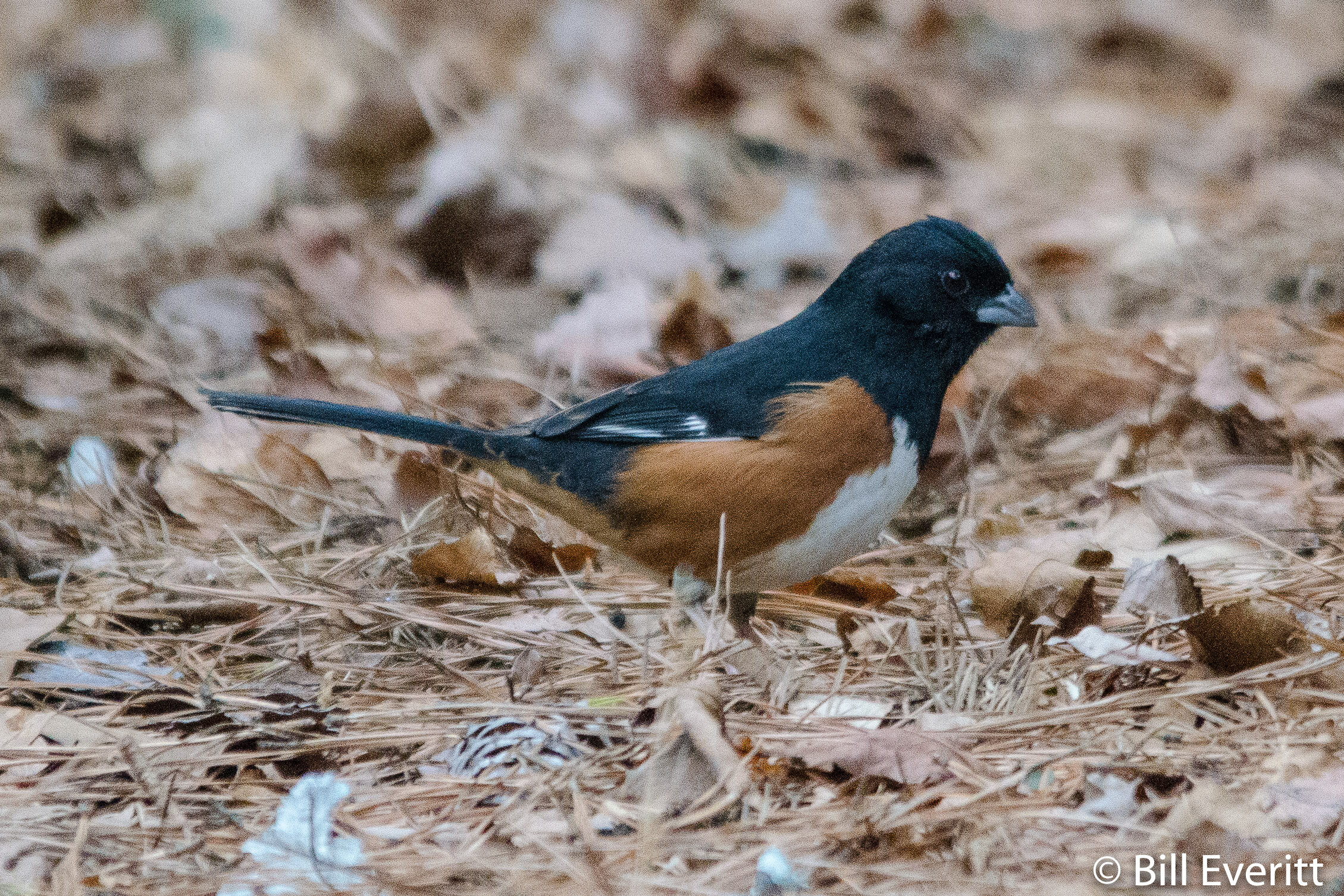
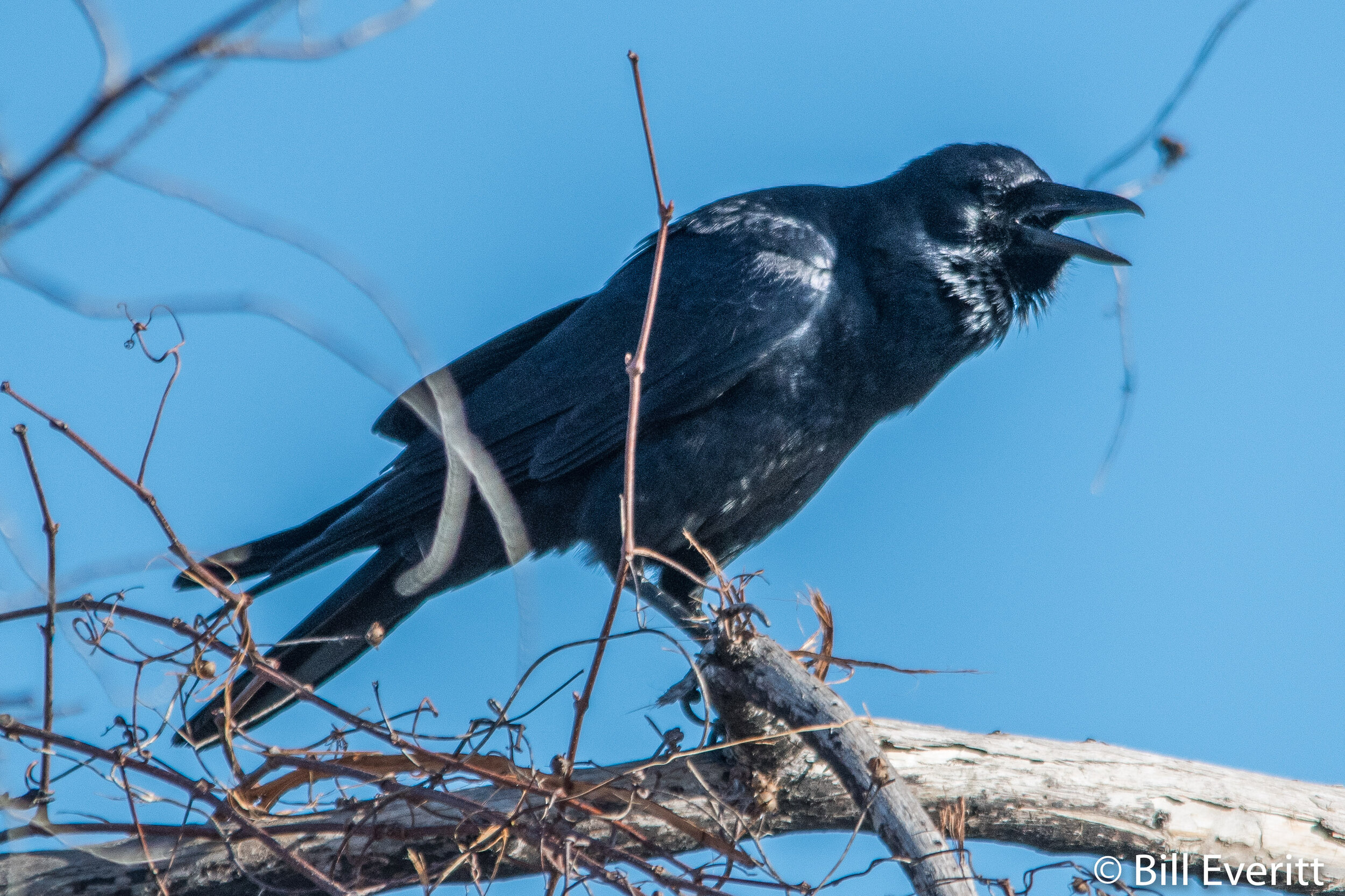
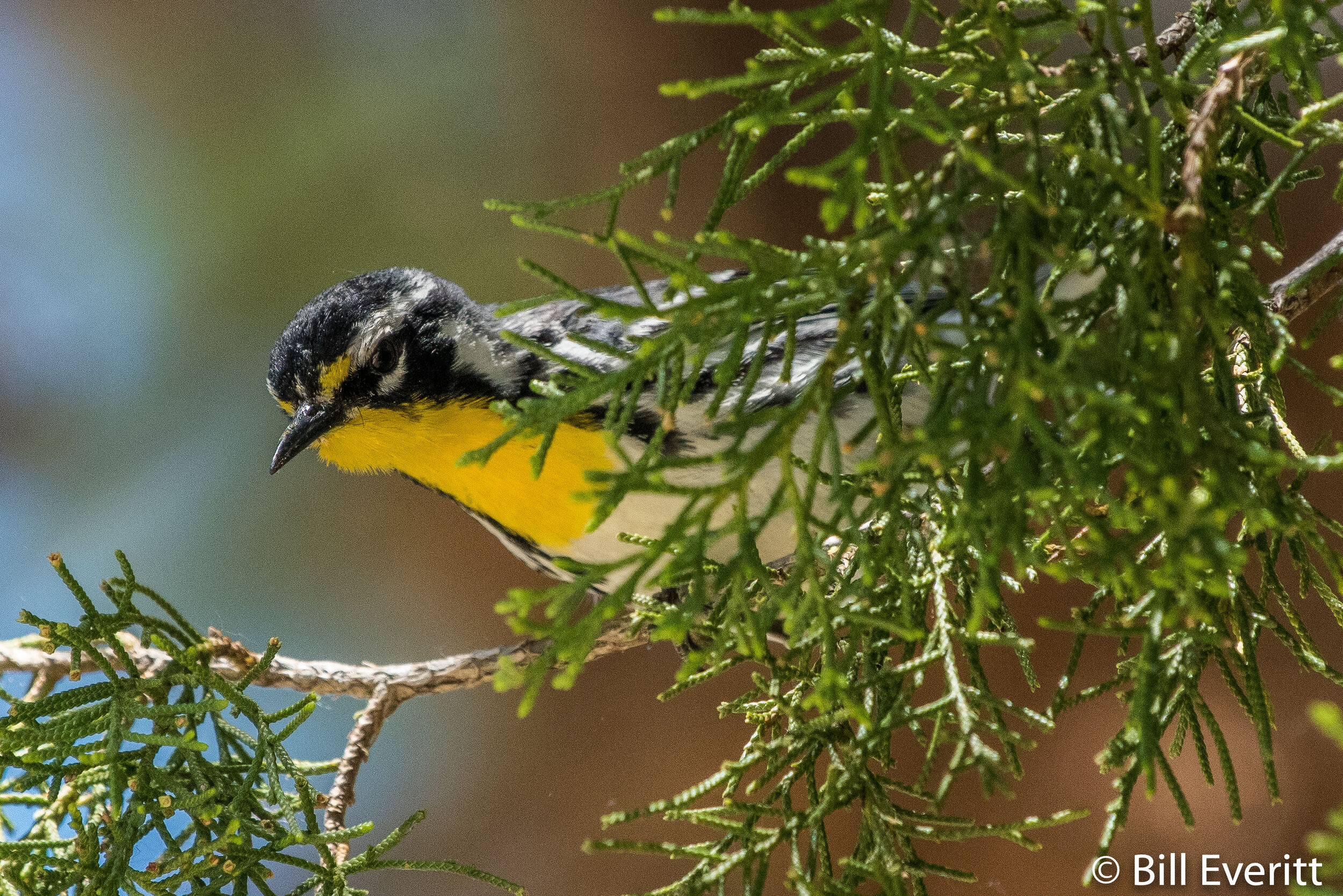
And it’s not just the Thrashers that are at risk. Eastern Towhee, Red-headed Woodpecker, Fish Crow and Yellow-throated Warbler are all in jeopardy. Another two dozen local species will also be affected and may see their numbers decline. Baltimore Orioles will no longer winter in Tallahassee.

Climate change is coming, but we can take steps to blunt its effects by decreasing our carbon footprint. It doesn’t mean that our community needs to stop growing or that we tear buildings down. Some steps are easy and even economical. Others may require more effort. We still need to save land, but climate change means that we need to do more.

I don’t want to lose the Brown Thrasher’s song.