By Juli deGrummond for Apalachee Audubon Society
It is that time of year when we slide into summer. Migration has pretty much completed, and we are left with our resident and breeding birds. For me, this is a great time either to narrow my focus to a laser-sharp view or to completely widen it, opening myself up to seeing things I do not usually pay as much attention to.
When I say I make my focus laser-sharp, I turn my attention primarily to bird behavior, watching my everyday birds more closely and looking for signs of something unique. During times of migration and seasonal change, I am always searching for new arrivals or birds that I do not get as much opportunity to see because they are simply visitors spending a little time in our area. With that type of focus, it is easy to overlook the really interesting things happening right in front of us with our everyday resident birds.
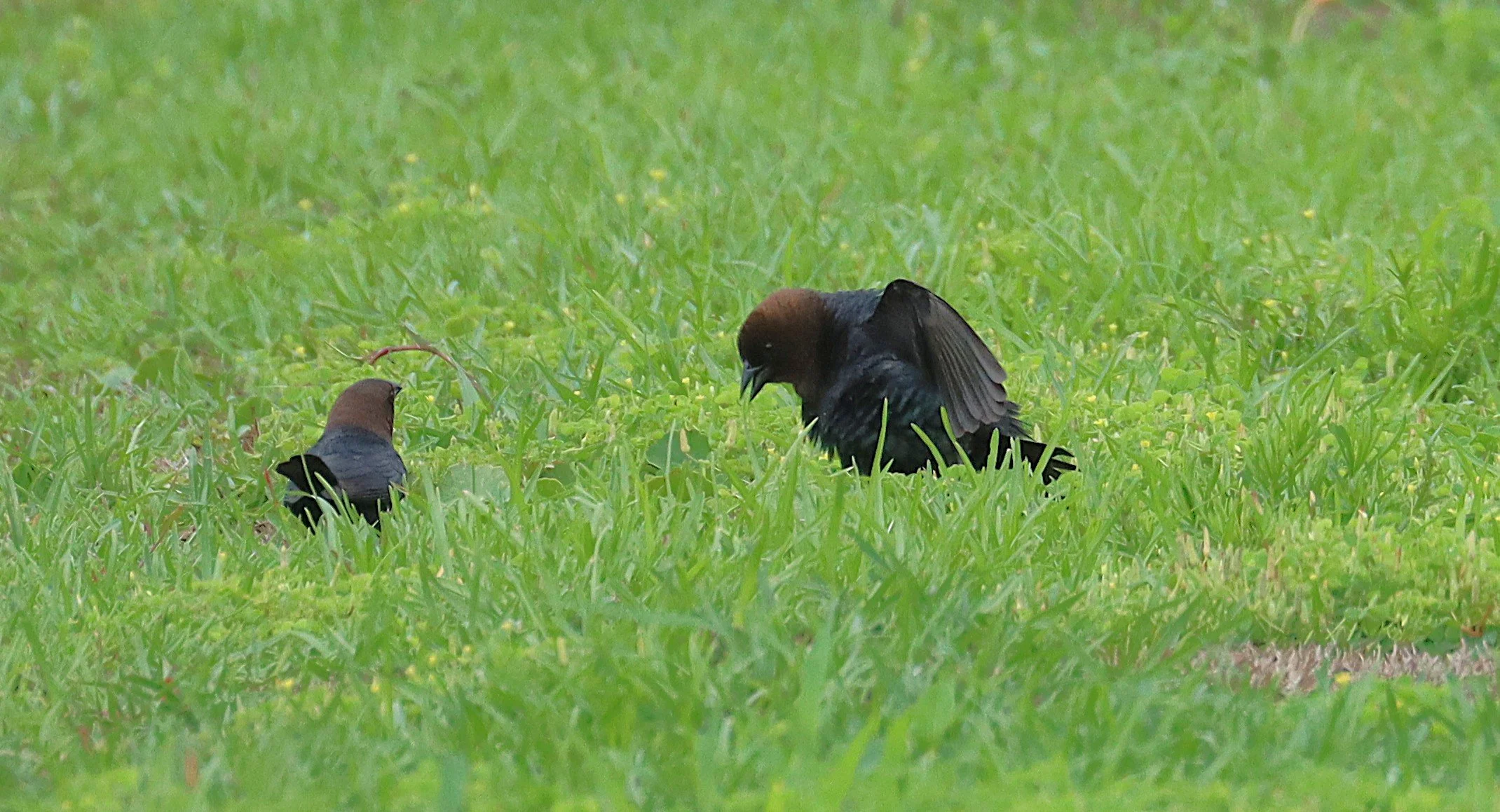
Now that my attention shifts back primarily to them, I notice more of the unusual behaviors associated with breeding season. This might be a fascinating display, such as two Downy Woodpeckers engaging in what looks like an imagined sword fight, jerking their heads from side to side as they cling face-to-face on a branch. It might be a comical Brown-headed Cowbird puffing himself up and strutting toward another male like a silly clown in an attempt to demonstrate his masculinity.
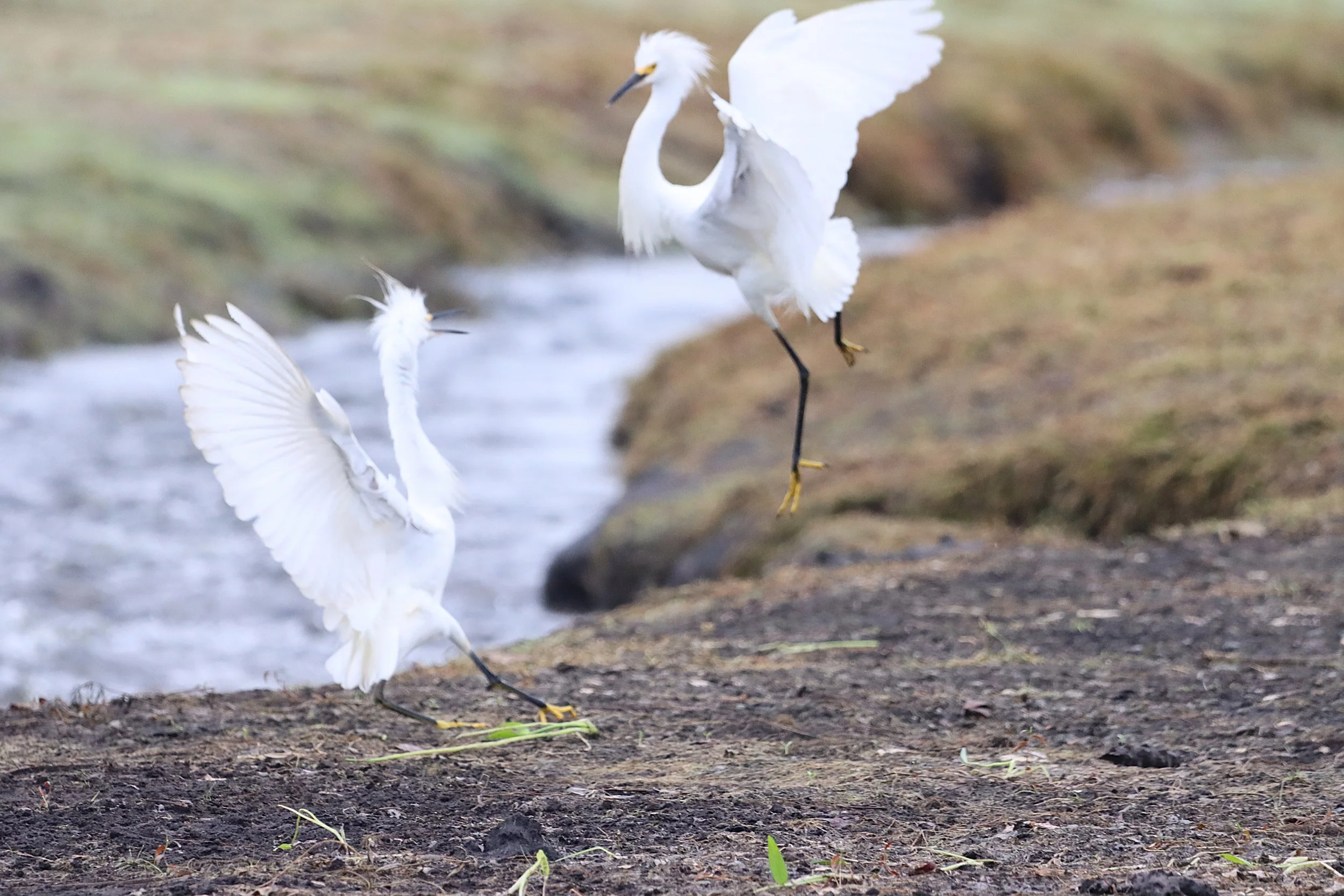
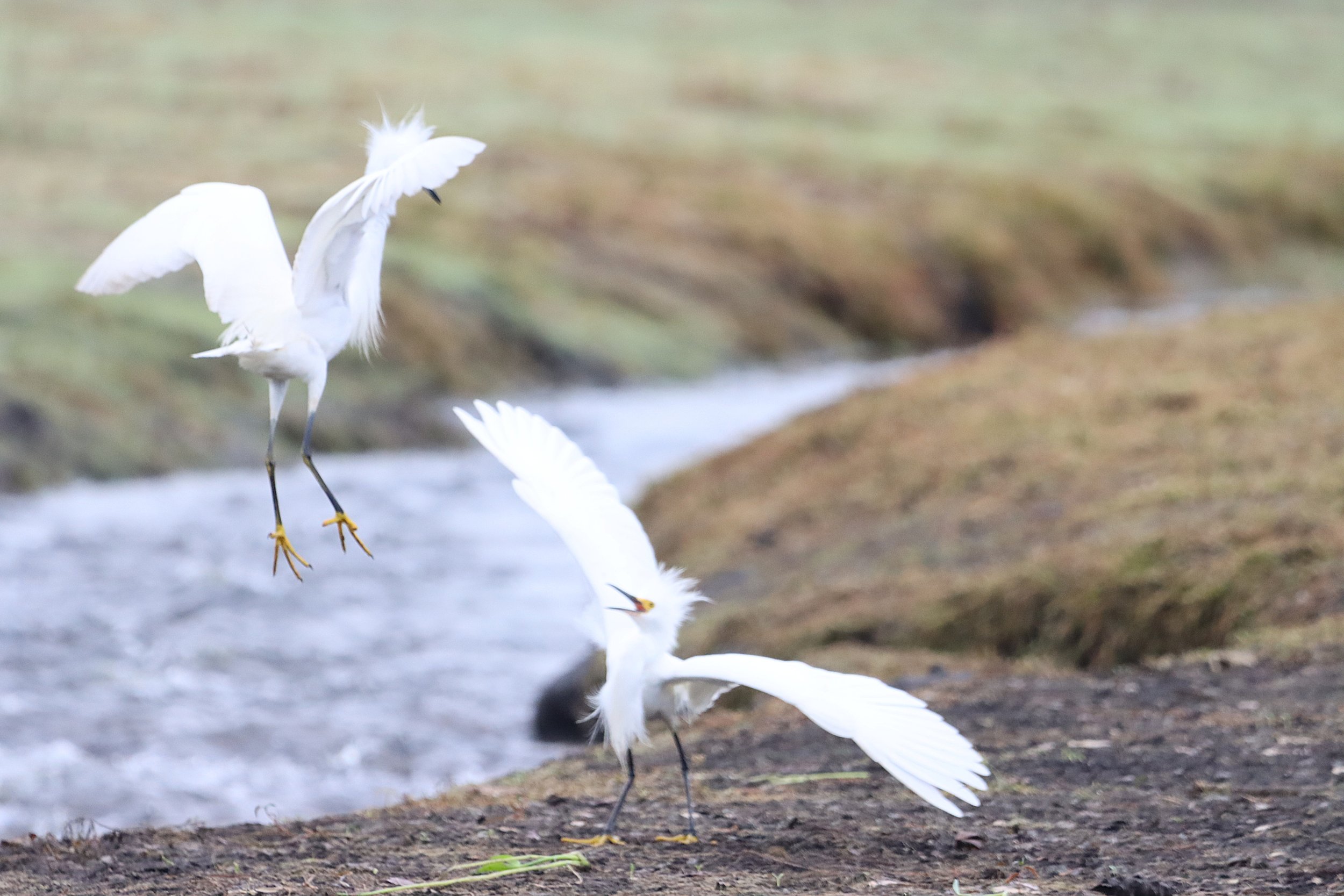
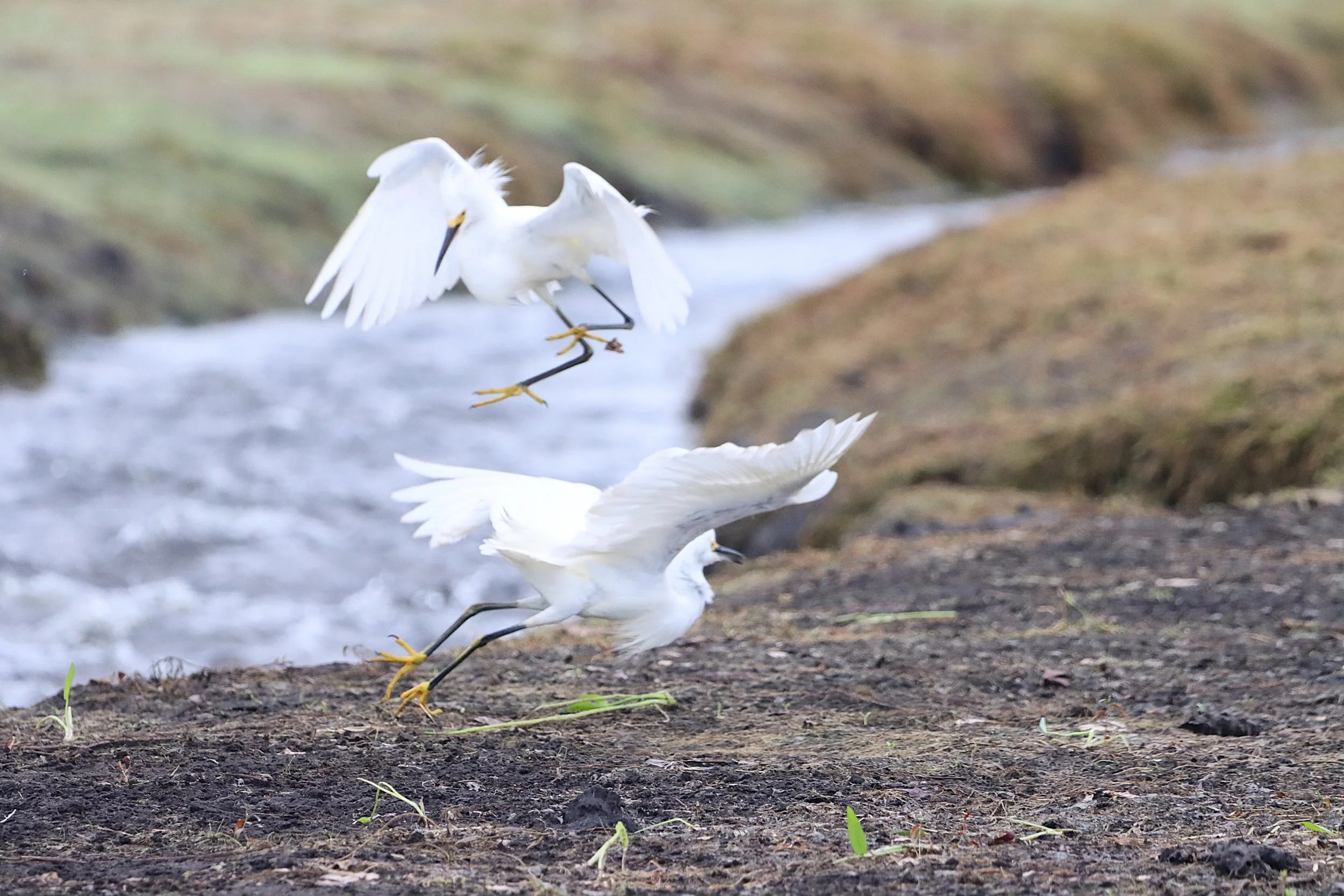
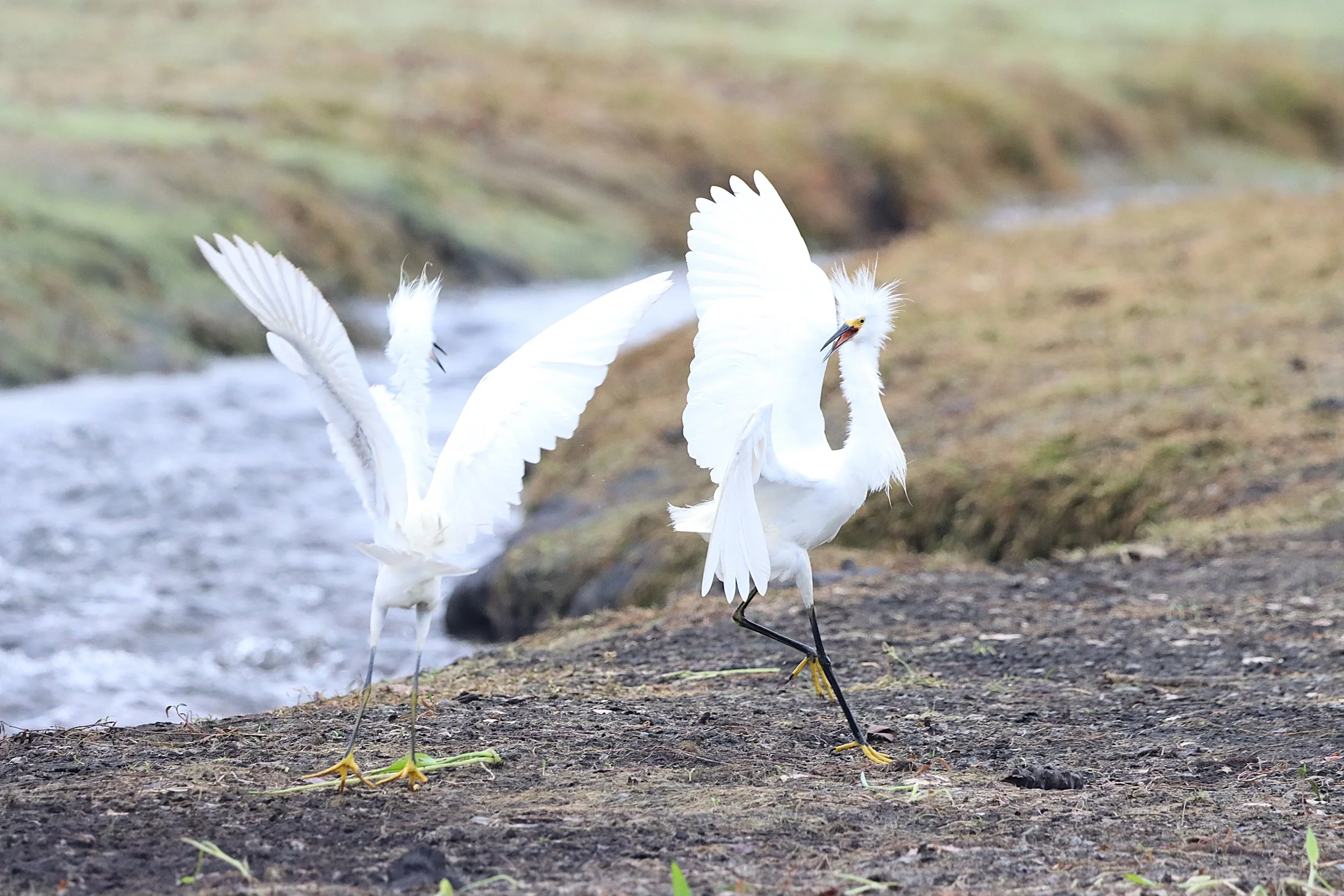
Or perhaps it is a pair of Snowy Egrets launching themselves into the air in an acrobatic dance, their head plumes standing on end like wild troll doll hair.
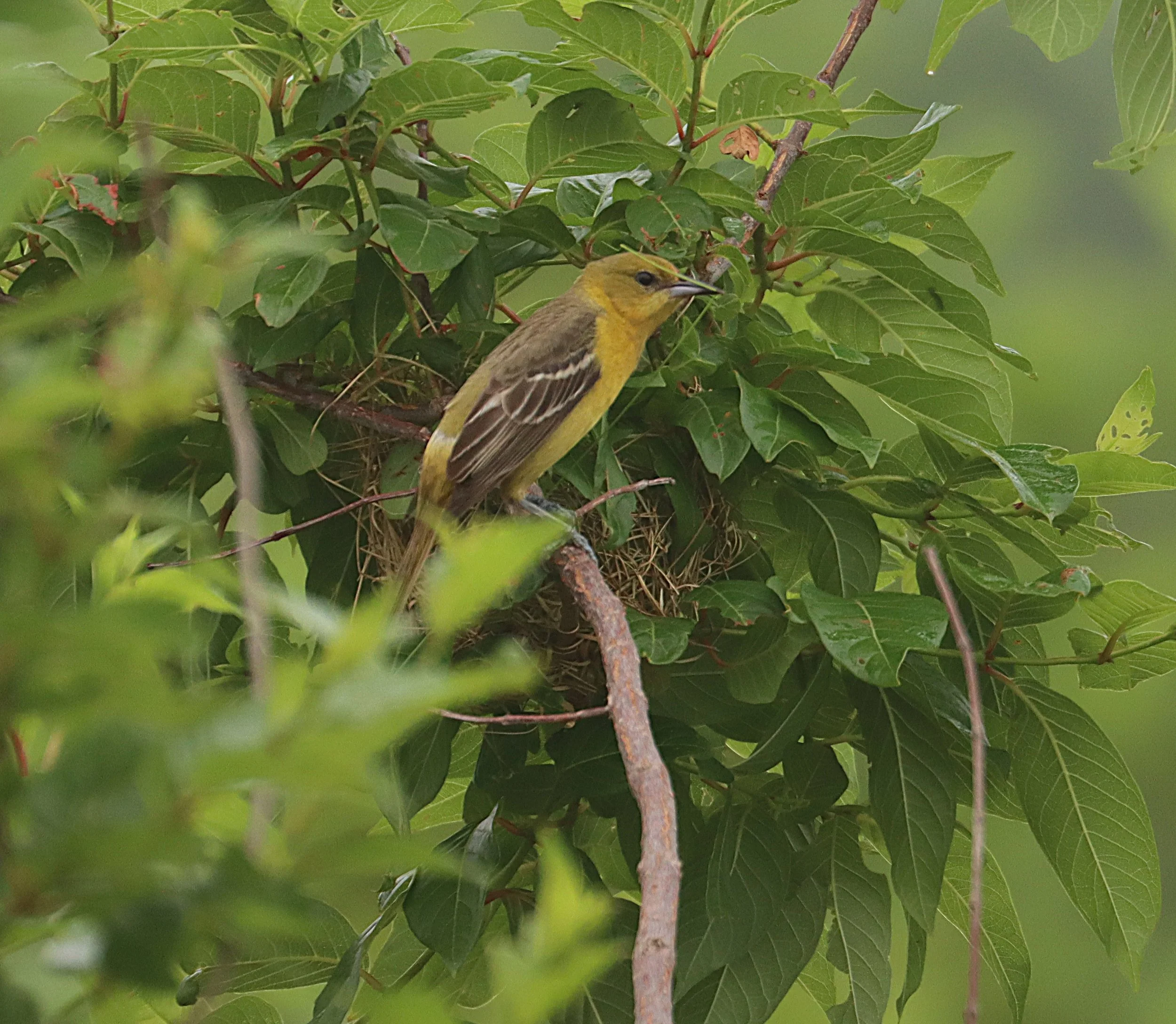
Nest building is another behavior that can be readily observed this time of year. Personally, I find the hanging basket nests of Orchard Orioles and White-eyed Vireos especially intriguing. What talent it takes to weave such a neat, tightly constructed nest that blends so perfectly into its surroundings. It is the kind of creation that could easily go unnoticed unless you are specifically looking for it and paying close attention.
Orchard Oriole (female)
Bird nests are incredibly diverse. Some species, such as Eastern Bluebirds, woodpeckers, and Prothonotary Warblers (one of only two warblers that will readily use a nest box), nest in cavities. Others, including many herons and egrets, nest in colonies. Shorebirds such as Killdeer nest directly on the ground, while species like Northern Cardinals and Blue Jays build the classic cup-shaped nests that many people envision when they think of birds. Then there are the tiny, heavily camouflaged nests of hummingbirds and Blue-gray Gnatcatchers, often decorated with lichens and nearly invisible to the casual observer. At the other extreme are the massive nests of raptors. And, of course, there are the beautifully woven hanging basket nests of vireos and orioles.
Finding a nest in the first place adds an extra layer of excitement and a different dimension to birding. Once a nest is discovered, it opens the door to all kinds of possibilities depending on its stage of development. Personally, I make it a point to return to an area if I find a nest under construction. Depending on the height and location of the nest, I might have the special opportunity to watch parent birds feed their young, carry away fecal sacs, defend the nest from intruders, or even witness a fledgling's first flight from the nest.
Maybe you did not get the opportunity to watch the young fledge, but you still have the chance to observe them as they learn to navigate their brave new world.
Just the other day, I observed a Northern Parula fledgling that had captured a very large spider.
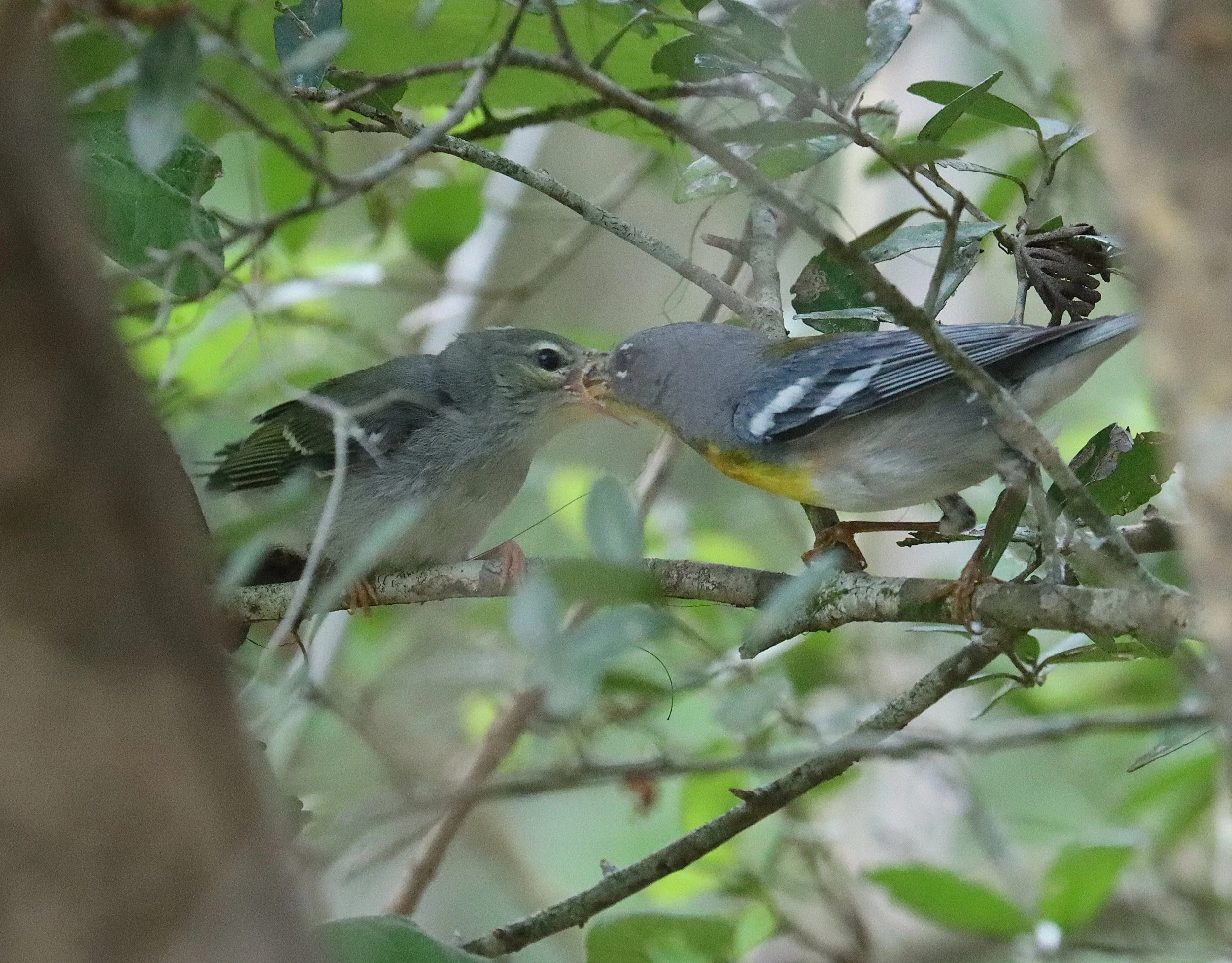
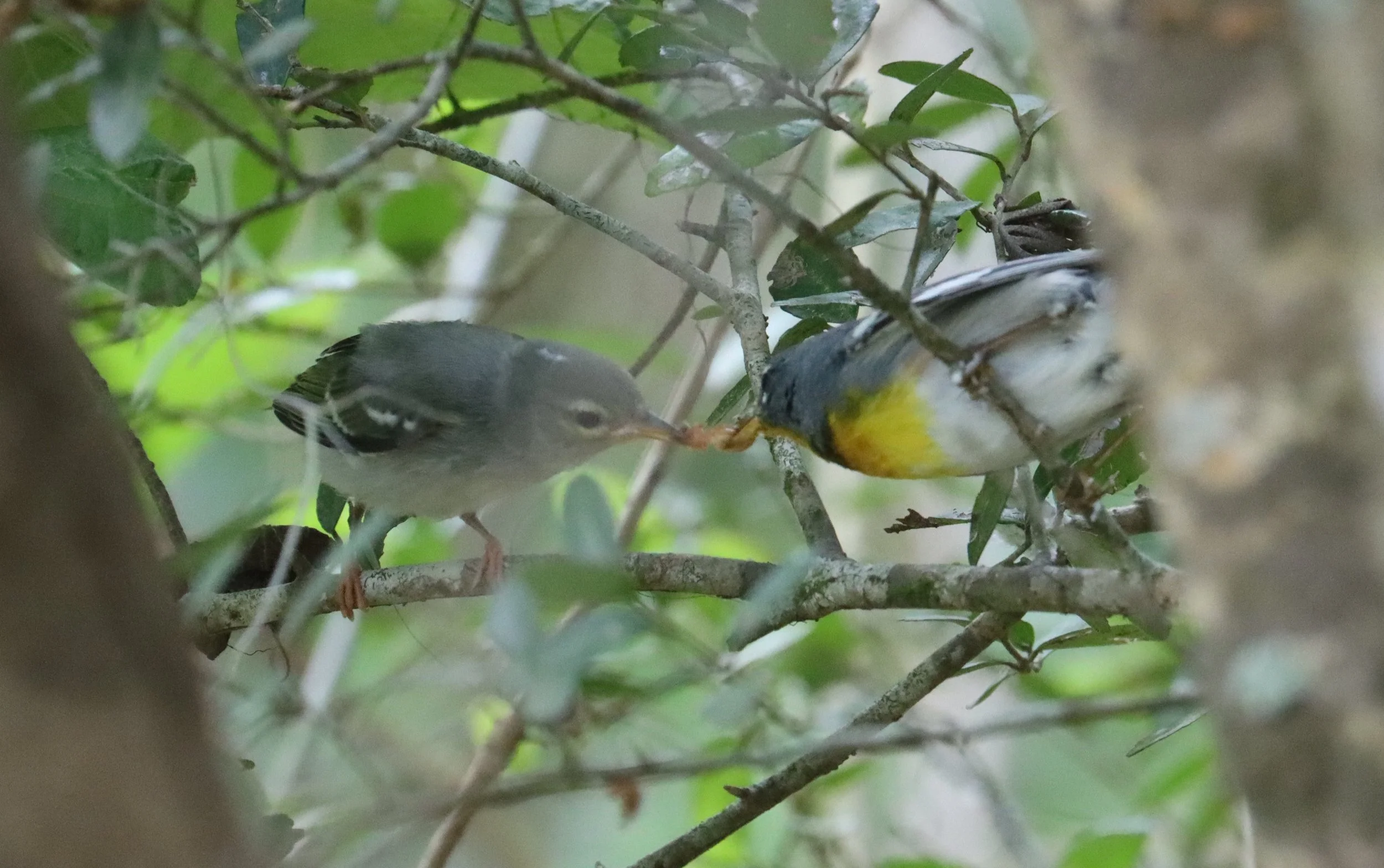
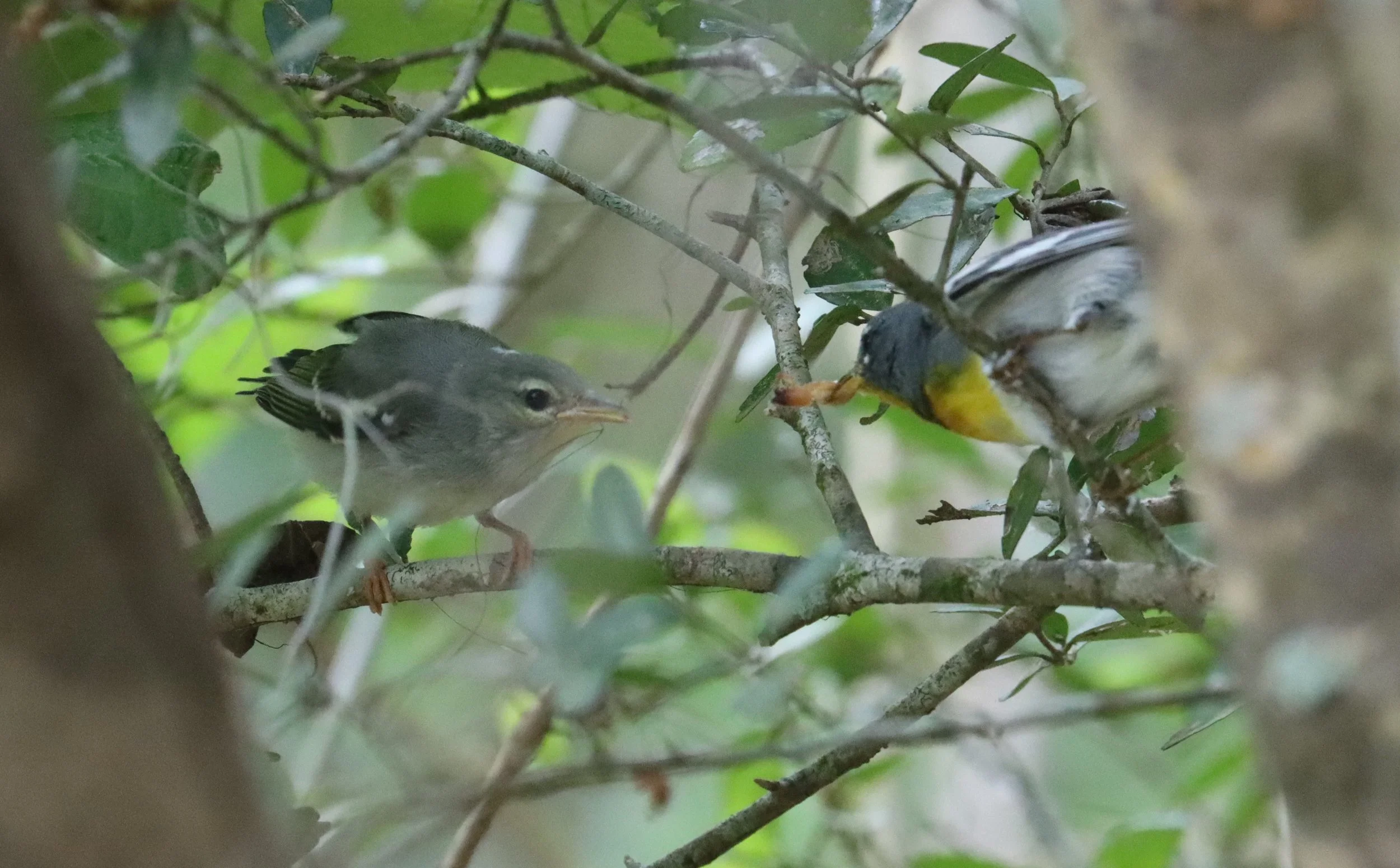
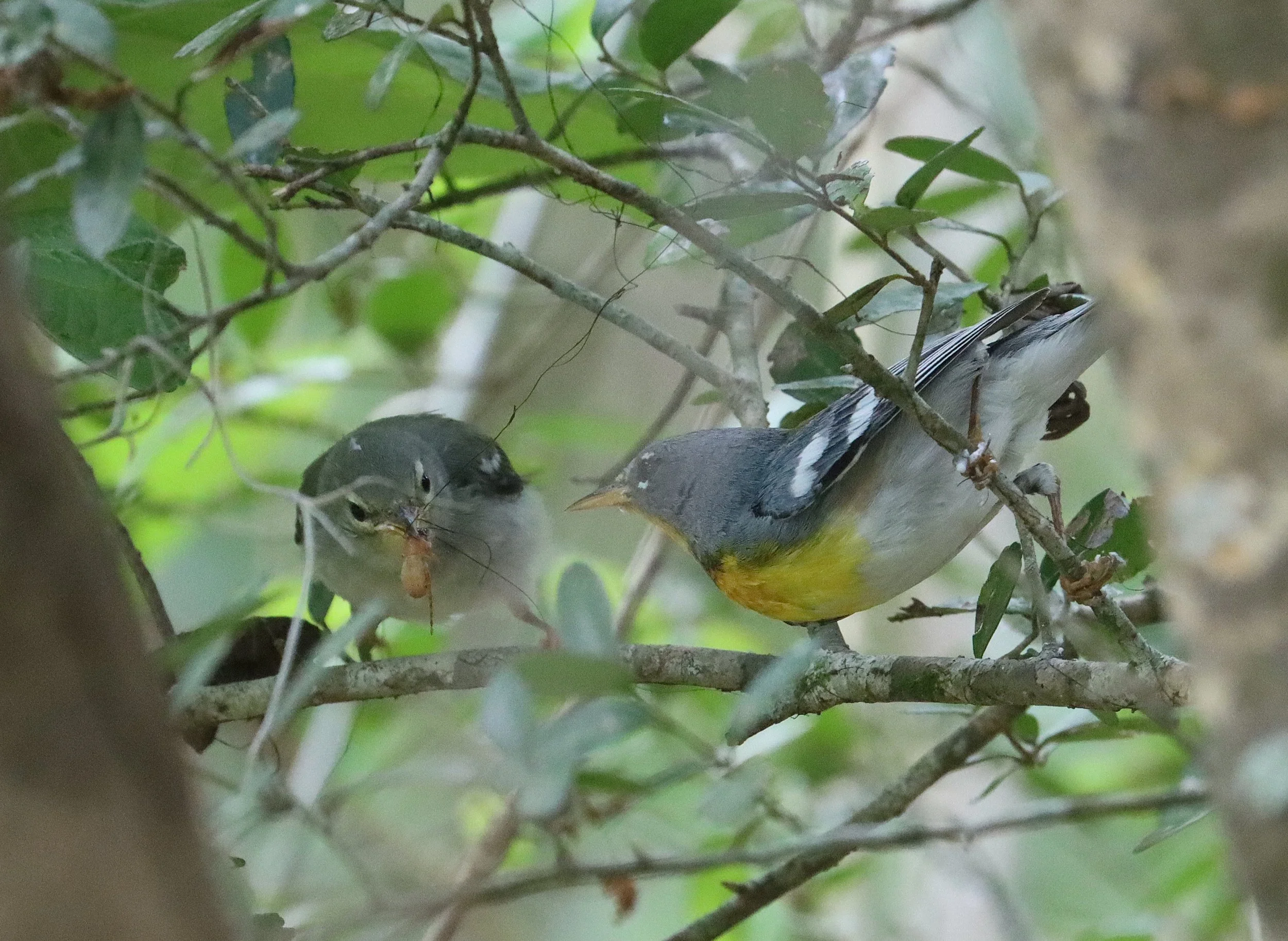
The young bird held it in his mouth but could not seem to figure out what to do next. His father flew in, took the spider from his beak, pulverized it into a more manageable size, and then crammed it back into the youngster's open mouth. This time, the fledgling was able to swallow it. The process of young birds learning to feed themselves can be fascinating to watch.
I will never forget the time I observed an unusual family of Orchard Orioles. This family consisted of a beautiful rust-and-black father, three young yellow Orchard Orioles, and their Brown-headed Cowbird sibling. The father foraged through a grassy field while encouraging all of his offspring to follow him and mimic his movements. From time to time, he would approach one of them and offer a grasshopper or another food item he had found.
I found the behavior of this unique family especially intriguing. To me, it served as a reminder that families do not always look the way we expect them to look, yet they are families nonetheless. The father did not seem to care that one of his young looked different from the others. As far as he was concerned, all four youngsters were his responsibility, and he diligently fed and guided each of them as they were learning how to fend for themselves and eventually survive on their own.
All of these observations add another layer of interest to an already interesting hobby. Watching all these different behaviors leads me to feeling that I know my feathery friends even better and that adds up to me being able to identify them better and knowing how to find them better.
Sometimes though, I go in the opposite direction with my focus and widden it to the other interesting things that I come across in the field. There are many other living things that live and grow in the same area as the birds I love. I do love all living things but in times of change when migration is going on, I might give them a glance and maybe take a picture but typically during these times they don't get much of my attention. Now is a great time to pay more attention to the various parts of the habitat and inhabitants that are in the same areas. It does not mean that you are not birding, simply looking at the other things in the area at the same time.
When you study birds you can not help but notice integral parts of their habitats that make certain areas better for the birds. One of the biggest components of these habitats is the plants that are there. There are many plants that are quite obvious like the huge Live Oak trees, berry-filled hollies, or Long-leaf Pines. I always make note of plants that have fruit or berries, as these are potential sources of food for the birds. I frequently keep an eye on growths of Elderberry, Beautyberry, and Mulberry because I know that when the time is right, the birds will come! Another important element of plants in the habitat is the insects they attract.
Almost all birds eat insects to some degree or at some stage of life. It may be that they only eat them when nesting or at a particular time of year but as a general rule, if you find a place that is buggy it is likely also good for birds. As a person who is absolutely obsessed with hummingbirds, I generally pay attention to flowers on plants and consider the likelihood that a hummingbird could be visiting them, but, I also consider the possibility of the insects that are attracted to them. I am paying attention to these things because it all ties into the birds I love but as I look more closely at these insects I start to find them interesting and sometimes even beautiful, realizing they have shimmery colors and intricate patterns.
There is also no shortage of interesting mammals that can be found in the various habitats we visit while looking for birds. I’ve seen cottontail and marsh rabbits, hispid cotton rats, fox squirrels, otters, and coyotes just to name a few.
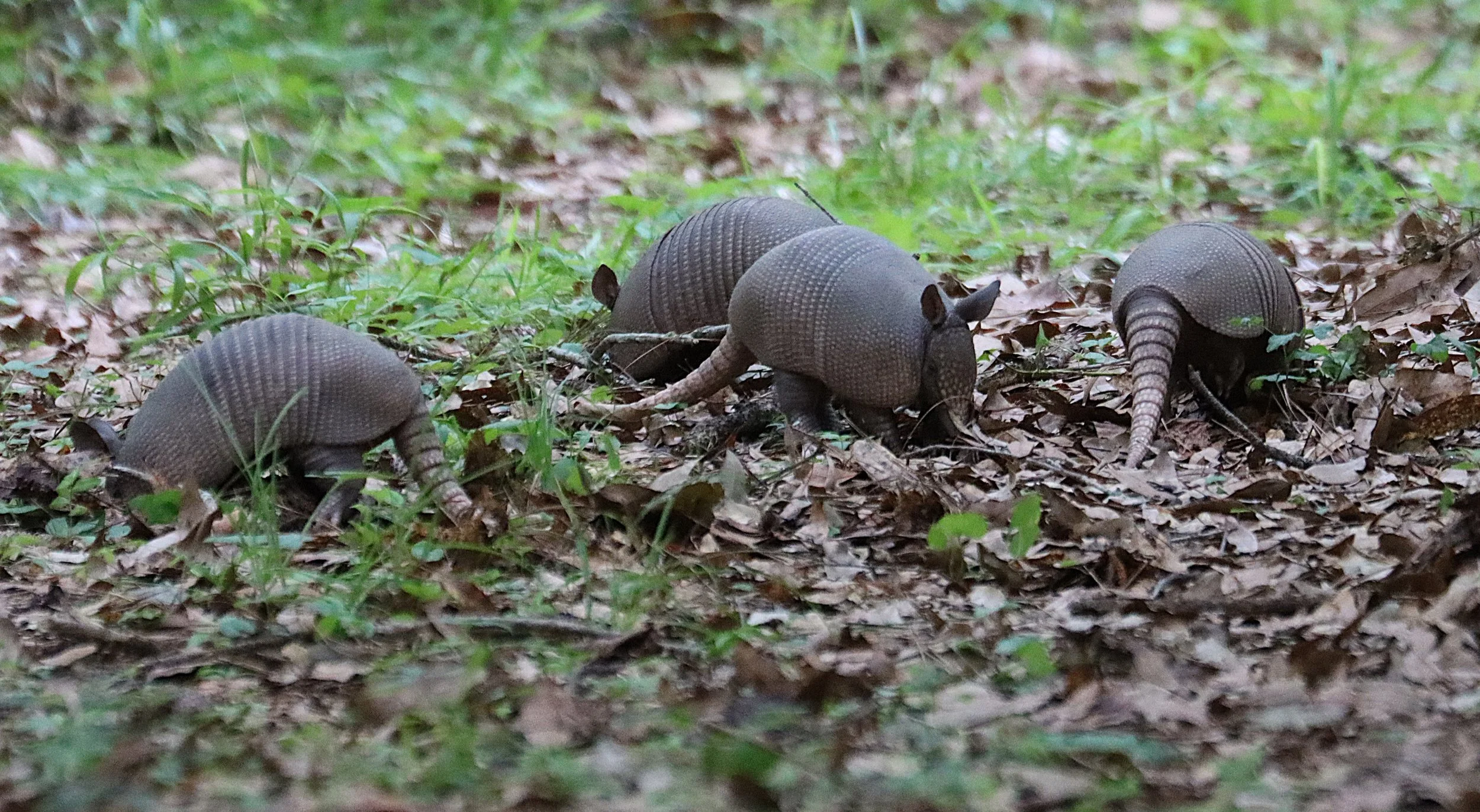
Some mammal encounters create lasting memories, for example, the day I watched a family of armadillos foraging, oblivious to my presence, while I stood quietly looking for birds. Though I don’t consider myself a photographer, I carry a camera for documentation, and it comes in handy for non-bird encounters as well.
In addition to mammals and insects there is at times an abundance of reptiles and amphibians that are fun to observe. There are many snakes, lizards, turtles, frogs, and toads. Some of my favorites of these fall clearly into the look but don't touch category. For example, Florida Cottonmouth, a semi-aquatic viper that lives in our area and frequently seen around our lakes and streams. Although they are venomous they are beautiful creatures that are just trying to live their lives.
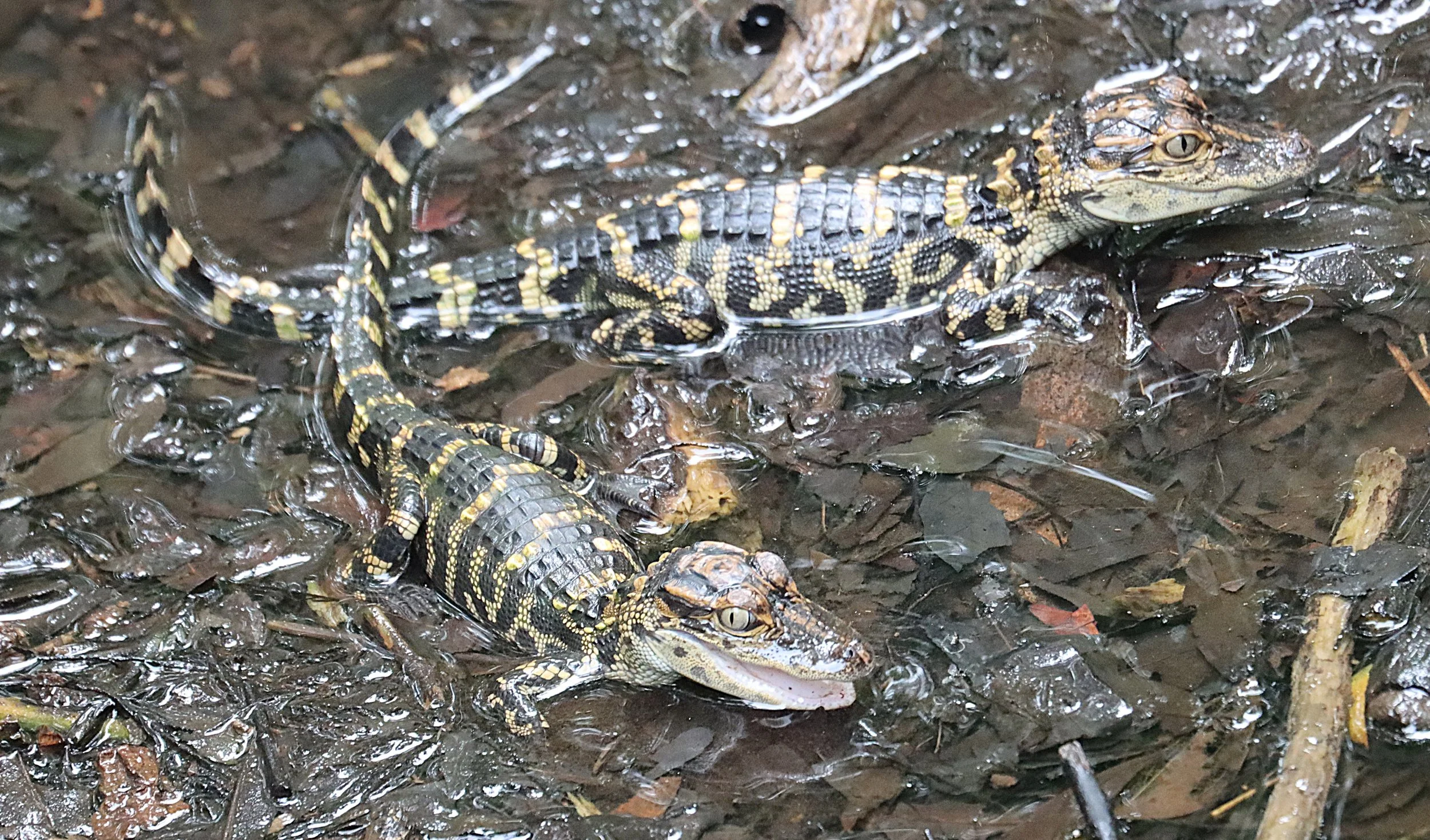
Another example is the American Alligator, once an endangered species, now copious in our area. Just two days ago I witnessed a pod of 17 baby alligators. I took great pleasure in watching them swimming around hunting for insects and small fish, and also communicating by making small croaking noises.
While I would never suggest that these observations take the place of birding, I will share with you, that for me they add to the enjoyment of my time in the field looking for birds. On a day that I come up with less birds or exciting behaviors, these other observations add to the experience and make it better. And while I do not consider myself someone who lacks appreciation or love for nature, I have found that embracing these things has, in fact, deepened my love and appreciation of the nature around me. I invite you to take this slow birding time to explore the different areas of the natural world and see what sparks your interest.
Juli deGrummond is a board member of the Apalachee Audubon Society.